If you’ve ever looked in the mirror and wished that stubborn acne mark, patch of melasma or annoying sun spot would hurry up and disappear, you’re definitely not alone.
Skin pigmentation is one of those things that can be incredibly frustrating. You can have your skincare routine working beautifully, only to be left with dark marks from spots that disappeared weeks — or even months — ago.
And when you start looking online for solutions, things can get confusing very quickly.
You’ll see products promising skin lightening, skin whitening, skin brightening, dark spot removal and even skin bleaching.
But are they all doing the same thing?
Not really.
For me, there’s an important difference between trying to change your natural skin color and simply wanting to fade patches of excess pigmentation.
If you’re dealing with acne marks, sun spots, melasma or uneven skin tone, there are some genuinely useful ingredients and treatments that can help.
Learn more about Cosmetic Procedures >
There are also some skin whitening products I wouldn’t touch.
So, let’s look at what actually works, what I think is worth trying and what I’d definitely avoid.
What Do We Actually Mean by Skin Lightening?
When I talk about skin lightening in this article, I’m really talking about fading areas that have become darker than your normal skin tone.
That might be:
Brown marks left behind by pimples
Sun spots
Age spots
Melasma
Uneven patches of pigmentation
Marks left after eczema or irritation
Dark spots following an injury or insect bite
The idea isn’t necessarily to make your whole face several shades lighter.
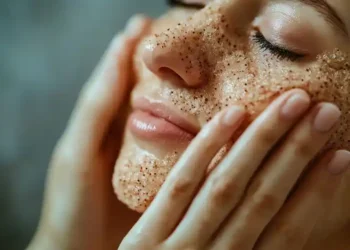
It’s more about getting your skin looking clearer, brighter and more even again.
And thankfully, that’s something skincare can often help with.
Skin Lightening, Skin Whitening and Skin Brightening — What’s the Difference?
These terms get mixed together all the time, so I wouldn’t get too hung up on the wording.
Generally, though, I think of them like this.
Skin lightening usually means reducing unwanted dark pigmentation.
Skin brightening is a gentler term and often means making dull skin look fresher and more radiant.
Skin whitening or bleaching tends to refer to deliberately trying to make the natural skin tone considerably lighter.
That’s where I become much more cautious.
There are perfectly legitimate treatments for hyperpigmentation, but there are also some very questionable whitening creams available online.
Some illegally marketed skin lightening products have even been found to contain mercury or undeclared hydroquinone, which is why I would never buy a mystery whitening cream just because the before-and-after photos look impressive.

Why Do We Get Dark Spots in the First Place?
It all comes down to melanin.
Melanin is the pigment responsible for much of the color in our skin, hair and eyes.
Your skin naturally produces it, and it’s actually important because melanin helps protect your skin against UV radiation.
The problem starts when certain areas produce more pigment than others.
That’s what gives us hyperpigmentation.
And there are quite a few things that can trigger it.
Sun Exposure
Sunlight is probably one of the biggest culprits.
If you’ve ever noticed freckles getting darker after a sunny holiday, you’ve already seen melanin production in action.
UV exposure tells your skin to produce more pigment.
Over the years, that can contribute to:
Freckles
Sun spots
Age spots
Uneven skin tone
It can also make pigmentation you already have considerably darker.
That’s why sunscreen comes up again and again whenever I talk about fading dark spots.
You can use the fanciest pigmentation serum in the world, but if you’re letting the sun darken the same spots every day, you’re making life much harder for yourself.
Those Dark Marks Left Behind After Spots
I think these are probably among the most annoying types of pigmentation.
You finally get rid of a breakout… and then the spot leaves a brown mark behind as a little reminder.
This is called post-inflammatory hyperpigmentation, or PIH.
It happens because inflammation can trigger extra melanin production.
Acne is an obvious cause, but you can also get PIH after:
Eczema
Cuts
Burns
Insect bites
Picking at your skin
Irritating skincare treatments
And this is also why I don’t recommend attacking dark spots with every acid you own.
If you make your skin sore and inflamed, you could actually end up creating more pigmentation rather than less.
What About Melasma?
Melasma is a little different from the occasional dark spot.
It usually appears as larger patches of brown or gray-brown pigmentation, often across the:
Cheeks
Forehead
Upper lip
Nose
Chin
Hormones can play a big part, which is why melasma is particularly associated with pregnancy and hormonal changes.
Sunlight is another major trigger.
Melasma can be stubborn, so this is definitely one condition where patience is needed.
You might improve it dramatically, but keeping it under control often means continuing with good sun protection and a sensible skincare routine long term.
So, Can You Really Lighten Dark Spots?
Yes.
But I think expectations are important.
There isn’t a magic serum that makes ten years of sun damage disappear by Friday.
Some pigmentation responds quite quickly, while other patches can take months.
It often depends on:
What caused the pigmentation
How deep the pigment is
Your skin tone
How long you’ve had it
Which treatments you’re using
How consistently you’re using sunscreen
The good news is that there are several ingredients that I think are genuinely worth knowing about.
The Skin Lightening Ingredients I Like
Vitamin C
Vitamin C is probably one of the first ingredients I’d look at if your skin is generally dull and uneven.
It’s an antioxidant and can help reduce the appearance of pigmentation while also helping protect skin against environmental damage.
Plus, it fits easily into a morning routine.
I like vitamin C because you’re potentially getting several benefits at once — brighter-looking skin, antioxidant protection and support for a more even complexion.
I would normally use it in the morning before moisturizer and sunscreen.
Niacinamide
If your skin is sensitive and you’re nervous about using lots of acids, niacinamide is a lovely place to start.
It’s vitamin B3 and has become incredibly popular for good reason.
It can help with:
Uneven skin tone
Redness
Oiliness
The skin barrier
The appearance of enlarged pores
Hyperpigmentation
It’s also one of those ingredients that tends to play nicely with other skincare products.
You don’t usually have to reorganize your entire bathroom shelf just to use it.
Azelaic Acid
Azelaic acid is one of my favorites, particularly if you have acne and dark marks at the same time.
That’s because it can help tackle the breakouts while also working on the pigmentation they leave behind.
It can also be useful for melasma and uneven tone.
If your skin is acne-prone and every pimple seems to leave a mark for months afterwards, azelaic acid is definitely an ingredient I’d consider.
Alpha Arbutin
You’ll find alpha arbutin in lots of modern dark-spot serums.
It works by targeting processes involved in melanin production, which can gradually help areas of excess pigmentation look lighter.
I particularly like that you’ll often find it in fairly simple serums alongside ingredients such as hyaluronic acid or niacinamide.
It’s not about stripping layers off your face.
It’s much more of a slow-and-steady pigmentation ingredient.
Kojic Acid
Kojic acid is another ingredient you may have seen in products specifically marketed for skin lightening.
It can help reduce excess pigment production and is often included in:
Serums
Creams
Cleansers
Kojic acid soaps
It can work well, but don’t assume you need the strongest product you can find.
Kojic acid can irritate some people’s skin, so I’d introduce it gradually.
Licorice Root
Licorice extract isn’t as dramatic-sounding as some of the other ingredients on this list, but I actually quite like seeing it in brightening products.
It’s often included in formulas designed to soothe the skin while improving uneven pigmentation.
If your skin tends to complain whenever you introduce something strong, a gentle brightening formula containing licorice can be worth considering.
Retinol and Retinoids
Retinol is one of those skincare ingredients that seems to turn up everywhere — acne, wrinkles, texture, pigmentation — but that’s because it genuinely does several things.
Retinoids increase skin-cell turnover.
Over time, this can help improve:
Dark spots
Uneven skin
Acne
Fine lines
Rough texture
Sun damage
The catch?
You need to be patient with it.
Trying to go from never using retinol to slathering it on every evening is a fairly reliable way to end up with red, flaky skin.
Start slowly.
Your skin doesn’t give out bonus points for suffering.
Glycolic, Lactic and Mandelic Acid
These are all alpha hydroxy acids, or AHAs.
They exfoliate the surface of the skin and can gradually help improve superficial pigmentation.
Glycolic acid tends to be one of the stronger and more popular options.
Lactic acid can be gentler.
Mandelic acid has larger molecules and is often a nice option for people who find stronger acids irritating.
Again, more exfoliation isn’t always better.
A mild acid used consistently can be much more useful than an extremely strong peel that leaves your skin irritated for a week.
Salicylic Acid
If your pigmentation comes mainly from acne, salicylic acid can be very useful.
It gets down into oily pores and helps prevent the clogged pores that can turn into spots.
And stopping new spots matters.
If you’re constantly developing new pimples that leave new dark marks, you’re fighting a losing battle by only treating the pigmentation.
Sometimes preventing the next mark is every bit as important as fading the old ones.
What About Hydroquinone?
You can’t really write a proper guide to skin lightening without talking about hydroquinone.
It’s one of the most effective and well-known ingredients for reducing pigmentation.
Dermatologists may use it for stubborn problems such as melasma and significant hyperpigmentation.
But this isn’t something I’d buy from a random online seller and use indefinitely.
In the US, hydroquinone skin lightening products are no longer legally sold as over-the-counter drugs. Prescription hydroquinone can still be used when prescribed appropriately.
Long-term or inappropriate use has also been linked with a rare condition called exogenous ochronosis, where the skin can develop dark blue-gray pigmentation.
That’s pretty much the opposite of what you were trying to achieve.
So, if you think you need hydroquinone, I would talk to a dermatologist rather than experimenting with it yourself.
Learn more about Skin Lightening Injections >
Skin Whitening Ingredients and Products I’d Avoid
There are some products where my advice is much simpler.
Don’t use them.
Mercury
Mercury has absolutely no place in your skincare routine.
Unfortunately, it has been discovered in some illegally marketed skin whitening products.
Mercury exposure can potentially damage the kidneys and nervous system, and people around you can also be exposed to mercury from contaminated products.
If you see ingredients such as:
Mercury
Mercurous chloride
Mercuric
Mercurio
Calomel
Hg
on a skin lightening product, don’t use it.
Mystery Whitening Creams
I’m also extremely wary of those little tubs of “extra strength whitening cream” sold online with enormous promises but very little information about what’s actually inside them.
If the ingredient list is missing, vague or written in a way you can’t verify, I’d move on.
Saving a few dollars isn’t worth gambling with your skin.
Strong Steroid Creams Used for Whitening
Steroid creams have completely legitimate medical uses.
Using strong steroids repeatedly simply to lighten the skin is another matter.
Long-term inappropriate use can cause problems such as:
Thinner skin
Visible blood vessels
Acne-like breakouts
Stretch marks
Increased sensitivity
If your dermatologist has prescribed a steroid as part of a particular treatment, that’s different.
I’m talking about using potent steroid creams as DIY skin whiteners.
Lemon Juice
This home remedy simply refuses to disappear.
Yes, lemons contain vitamin C.
No, that doesn’t mean squeezing a lemon onto your face is the same as using a professionally formulated vitamin C serum.
Lemon juice is very acidic and can irritate your skin.
And remember what we talked about earlier?
Irritation can cause more pigmentation.
I’d leave the lemons in the kitchen.
Baking Soda
Another one I wouldn’t recommend.
Baking soda is alkaline, while your skin naturally maintains a slightly acidic environment.
Repeatedly putting baking soda on your face can disrupt the skin barrier and leave it feeling dry and irritated.
There are so many good skincare ingredients available now that there really isn’t any need to scrub your face with something from the baking cupboard.
If You Do Nothing Else, Wear Sunscreen
This is probably the least exciting advice in the whole article.
It’s also possibly the most important.
If you’re trying to fade pigmentation, sunscreen needs to become part of your normal morning routine.
Sun exposure can make existing marks darker and encourage new pigmentation.
I would look for:
Broad-spectrum protection
At least SPF 30
Ideally SPF 50 if pigmentation is a major concern
A texture you’ll actually wear every day
And that last point matters.
The “best” sunscreen isn’t much use sitting unopened in your bathroom cabinet because it feels horrible on your face.
Find one you genuinely like.
If you have melasma, tinted sunscreen containing iron oxides is particularly interesting because visible light may contribute to melasma as well as UV exposure.
My Simple Routine for Uneven Pigmentation
You really don’t need to pile ten active ingredients onto your face.
In fact, I’d rather keep things boring and consistent.
Morning
Cleanser
Use something gentle.
There is no need for your skin to feel squeaky clean.
One Brightening Treatment
I’d choose something like:
Vitamin C
or
Niacinamide
You don’t necessarily need both.
Moisturizer
Use whatever suits your skin type.
Sunscreen
SPF 30–50, broad spectrum.
Don’t skip it.
Evening
Cleanser
Remove makeup, sunscreen and the day’s dirt.
One Main Treatment
Choose according to your skin.
For example:
Acne + dark marks: azelaic acid
General pigmentation + anti-aging: retinol
Superficial dullness and pigmentation: an AHA
Gentler pigmentation treatment: alpha arbutin or niacinamide
Moisturizer
And you’re done.
You don’t need to turn your evening skincare routine into a chemistry experiment.
How Long Before You See Results?
I know this isn’t the answer anyone wants, but pigmentation usually requires patience.
You might start noticing small improvements after a few weeks.
More stubborn pigmentation can take several months.
Melasma can take even longer and may require ongoing maintenance.
I’d take a photo before you start treating it.
When you stare at your face every day, tiny changes are really hard to notice.
Compare photos after eight or twelve weeks and you may realize you’ve made much more progress than you thought.
What About Professional Skin Lightening Treatments?
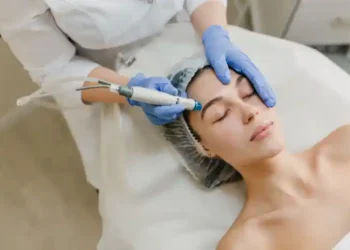
If skincare isn’t shifting stubborn pigmentation, there are professional options.
These include:
Chemical peels
Laser treatments
IPL
Microneedling
Prescription creams
But this is definitely an area where I think the person doing the treatment matters enormously.
Particularly if you have darker skin or melasma.
Chemical Peels
A chemical peel uses an acid solution to exfoliate controlled layers of the skin.
It can potentially improve:
Pigmentation
Sun damage
Fine lines
Rough texture
Acne marks
But deeper isn’t automatically better.
An overly aggressive peel can cause inflammation and actually leave you with more pigmentation.
Lasers and IPL
Laser and IPL treatments can be brilliant for certain types of pigmentation.
But they’re not something I’d choose simply because a clinic is running a special offer.
Different pigmentation problems need different treatments.
Something that works wonderfully on a sun spot might be completely wrong for melasma.
If you’re considering laser treatment, I’d want someone to identify exactly what type of pigmentation they’re treating first.
Microneedling
Microneedling is another treatment you might see recommended for pigmentation, particularly when acne scars or skin texture are part of the problem.
Again, pigmentation-prone skin needs to be treated carefully.
I’d much rather have a conservative treatment from someone experienced than an aggressive treatment promising instant results.
A Special Word About Darker Skin Tones
If you naturally have a medium or dark skin tone, I’d be particularly careful about aggressive pigmentation treatments.
That’s because skin with more melanin can be more prone to post-inflammatory hyperpigmentation.
In plain English, irritating your skin while trying to lighten a dark mark can create another dark mark.
Not exactly helpful.
That doesn’t mean you can’t treat pigmentation.
You absolutely can.
It just makes gentle, controlled treatment especially important.
And if you’re considering lasers or stronger chemical peels, I’d specifically look for a dermatologist or practitioner who regularly treats people with your skin tone.
Can You Permanently Lighten Your Skin?
If we’re talking about your natural skin color, that’s not something I’d try to permanently change.
Your skin produces melanin for a reason.
If we’re talking about an individual dark spot, then yes, some spots can fade enormously or even disappear.
But pigmentation can return.
Sun exposure can bring it back.
Acne can create new marks.
Hormonal changes can cause melasma to return.
That’s why I think of pigmentation treatment as a combination of fading existing marks and preventing new ones.
Can You Lighten Skin Naturally?
If by naturally you mean rubbing lemon, turmeric, baking soda or various kitchen ingredients onto your face, I’d give most of those ideas a miss.
Natural doesn’t automatically mean safe.
Poison ivy is natural too.
There are gentle skincare ingredients that make much more sense.
If I wanted a fairly simple brightening routine, I’d look for things such as:
Vitamin C
Niacinamide
Azelaic acid
Alpha arbutin
Licorice extract
And, of course, sunscreen.
It’s not particularly glamorous, but it’s much kinder to your skin.
Why Your Skin Lightening Routine Might Be Making Things Worse
If your face is constantly:
Red
Burning
Peeling
Tight
Sore
Flaking
there’s a good chance you’re doing too much.
It’s very tempting when you have a stubborn dark spot.
A little glycolic acid isn’t working fast enough, so you add retinol.
Then vitamin C.
Then a peel.
Then a kojic acid soap.
Suddenly you’ve created a skincare boot camp.
The problem is that inflammation can make pigmentation worse.
Sometimes the best thing you can do is simplify your routine, repair your skin barrier and start again slowly.
When I’d See a Dermatologist
Most harmless pigmentation isn’t an emergency.
But don’t automatically assume every brown or dark mark is something you should try to bleach away.
Get a spot checked if it:
Changes shape
Changes color
Suddenly gets bigger
Bleeds
Becomes raised
Itches repeatedly
Looks completely different from your other spots
I’d also consider seeing a dermatologist if you’ve been consistently treating pigmentation for several months without much improvement.
There may be a more effective prescription treatment available — and, importantly, you’ll know exactly what type of pigmentation you’re dealing with.
Skin Lightening FAQs
1. What Is the Fastest Way to Lighten Dark Spots?
There isn’t one treatment that’s fastest for everyone.
For everyday pigmentation, I’d start with good sunscreen and one proven treatment such as azelaic acid, vitamin C, a retinoid or alpha arbutin.
Very stubborn pigmentation may respond better to prescription treatment or a professional procedure.
2. Which Ingredient Is Best for Skin Lightening?
It depends on your skin.
If you have acne as well, I’d seriously consider azelaic acid.
For general brightening, vitamin C and niacinamide are easy options.
For pigmentation plus signs of aging, retinol can be particularly useful.
For stubborn pigmentation, a dermatologist may recommend stronger prescription treatments.
3. Does Vitamin C Whiten Your Skin?
It shouldn’t bleach your natural skin color.
What it can do is help areas of excess pigmentation fade, making your overall complexion look brighter and more even.
That’s a very different thing.
4. Does Niacinamide Lighten Dark Spots?
It can help.
Niacinamide is especially appealing because it’s generally quite gentle and helps support the skin barrier at the same time.
Don’t expect an overnight transformation, though.
Think gradual improvement.
5. Does Sunscreen Actually Fade Dark Spots?
Sunscreen isn’t technically bleaching the spots.
Instead, it’s stopping sunlight from continually telling your skin to produce more pigment.
That gives your existing pigmentation a much better chance to fade.
So while sunscreen might not feel like a “treatment,” I’d consider it an essential part of one.
6. Can Acne Marks Completely Disappear?
Some absolutely can.
Others may fade considerably but leave a slight difference in tone.
It depends partly on whether you’re dealing with flat pigmentation or an actual acne scar.
A flat brown mark and an indented acne scar are two very different problems and need different treatments.
7. Is Skin Whitening Safe?
It depends entirely on what you mean by skin whitening.
Using properly formulated skincare to fade acne marks, sun spots or hyperpigmentation can be perfectly reasonable.
Using unregulated bleaching creams to dramatically change your natural skin color is much more concerning.
I would particularly avoid anything containing mercury or mystery products without a trustworthy ingredient list.
My Takeaway
If there’s one thing I’d like you to take away from this guide, it’s that you really don’t have to wage war on your skin to get rid of pigmentation.
Gentle and consistent usually wins.
Protect your skin from the sun.
Choose one or two good pigmentation ingredients.
Keep your skin barrier happy.
And give everything enough time to actually work.
I’d much rather see someone gradually fade their dark spots over three months than destroy their skin barrier trying to do it in three days.
Your natural skin tone doesn’t need fixing.
But if acne marks, sun spots or patches of hyperpigmentation are bothering you, there are plenty of sensible ways to help your skin look clearer, brighter and beautifully even again.
Useful Links
American Academy of Dermatology – How to Fade Dark Spots in Darker Skin Tones
Useful for hyperpigmentation, post-inflammatory dark spots, treatment approaches and prevention.
https://www.aad.org/public/everyday-care/skin-care-secrets/routine/fade-dark-spots
FDA – Skin Product Safety: Skin Lightening Products
Particularly useful for your safety section, including warnings about mercury, hydroquinone and unregulated whitening products.
https://www.fda.gov/consumers/skin-facts-what-you-need-know-about-skin-lightening-products/skin-product-safety
Cleveland Clinic – Hyperpigmentation: Causes and Treatment
A good general reference covering causes of pigmentation and ingredients such as azelaic acid, glycolic acid, kojic acid, vitamin C and niacinamide.
https://my.clevelandclinic.org/health/diseases/21885-hyperpigmentation