Dry brushing is one of those beauty rituals that sounds almost too simple to make much difference. You take a firm-bristled body brush, gently sweep it over dry skin, shower, moisturize, and you’re done.
But despite its simplicity, dry brushing can be a lovely addition to a regular body-care routine. I particularly like it when my skin is looking dull, rough, or flaky because the immediate exfoliating effect can leave it feeling noticeably smoother.
More Skin Care Tips >
There are also plenty of bigger claims surrounding dry brushing—from detoxifying the body to eliminating cellulite. Some of those promises go far beyond what research actually supports. So, if you’re thinking about trying it, it helps to know what dry brushing genuinely can—and cannot—do for your skin.
What Is Dry Brushing?
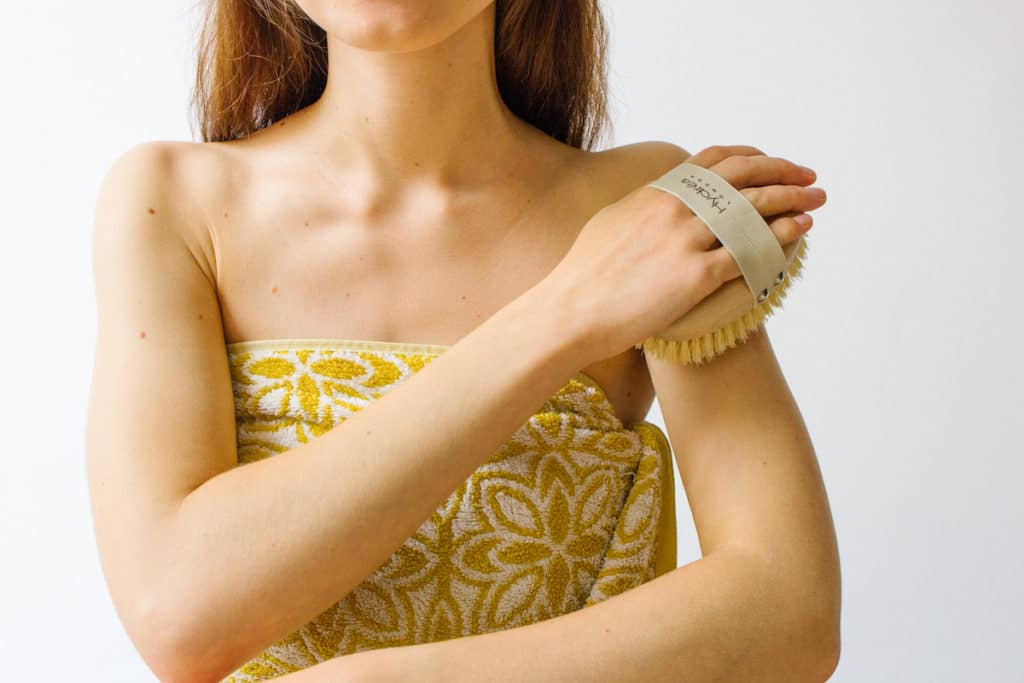
Dry brushing is exactly what the name suggests: brushing dry skin with a body brush without using water, cleansers, oils, or lotions.
Most dry brushes are made with relatively firm bristles and have either a handheld design or a long handle that makes areas such as the back easier to reach.
The brush is passed across the skin using gentle strokes. This physically removes some of the dead cells sitting on the surface of the skin.
Think of it as a form of mechanical exfoliation for your body.
Unlike a body scrub, you don’t need sugar, salt, acids, or other exfoliating ingredients. The bristles themselves provide the exfoliation.
Benefits of Dry Brushing
1. It Exfoliates Dry Skin
This is probably the most convincing reason to try dry brushing.
Dead skin cells naturally build up on the surface of our skin. While they eventually shed by themselves, gentle exfoliation can help remove some of that buildup.
After dry brushing, I find that areas such as my legs, arms, knees, and elbows can feel considerably smoother.
Removing flaky surface cells may also make skin appear brighter simply because its surface is smoother and reflects light more evenly.
2. It Can Make Skin Feel Softer
If your body skin frequently feels rough, dry brushing may help improve its texture.
You may notice an especially big difference when you follow brushing with a shower and moisturizer.
That’s an important combination.
Dry brushing exfoliates, but it doesn’t moisturize. Applying a body cream or lotion afterward helps replenish moisture and support the skin barrier.
3. It Can Help Prepare Skin for Moisturizer
Layers of dry, flaky skin can sometimes make body lotions feel as though they’re just sitting on top of your skin.
After gently exfoliating, moisturizer may spread much more smoothly.
I like to apply moisturizer while my skin is still slightly damp after showering. This helps trap some of that water in the skin and makes the whole routine feel much more nourishing.
4. It May Temporarily Increase Surface Circulation
Brushing and massaging the skin can cause temporary redness because blood flow increases near the surface.
That warm, slightly pink appearance is usually short-lived.
You will sometimes see claims that dry brushing dramatically improves circulation throughout the body. That’s harder to substantiate.
I prefer to think of the circulation effect as a temporary response to rubbing and stimulation rather than a treatment for poor circulation.
5. It Can Feel Invigorating
This isn’t really a medical benefit, but it’s one of my favorite things about dry brushing.
The sensation can feel surprisingly refreshing, particularly first thing in the morning.
Some people also enjoy turning dry brushing into a little pre-shower ritual. Taking five minutes to focus on body care can make an otherwise ordinary shower feel much more spa-like.

Does Dry Brushing Help Cellulite?
This is where expectations need to be realistic.
Dry brushing is frequently promoted as a natural cellulite treatment. However, there isn’t convincing evidence that brushing permanently removes cellulite.
Cellulite develops because of the relationship between fat beneath the skin and fibrous connective tissue. Simply brushing the surface of your skin isn’t going to fundamentally change those structures.
Dry brushing may temporarily make skin look smoother or slightly plumper because of exfoliation and increased surface blood flow.
That could make cellulite appear less obvious for a short period.
But I’d be very skeptical of anyone claiming that dry brushing will permanently “break down” cellulite.
Can Dry Brushing Detox Your Body?
Another popular claim is that dry brushing removes toxins.
Our bodies already have highly sophisticated systems for dealing with waste, primarily involving the liver and kidneys.
Dry brushing does not literally brush toxins out through the skin.
You may also hear that brushing stimulates lymphatic drainage. While specialized lymphatic massage can be used in certain medical circumstances, ordinary home dry brushing shouldn’t be considered equivalent to professional lymphatic drainage therapy.
So I wouldn’t buy a dry brush specifically to “detox.”
I’d buy one because you want smoother-feeling skin and enjoy the sensation.
How to Dry Brush Your Skin
You don’t need an elaborate technique.
Step 1: Start With Completely Dry Skin
Dry brushing is usually done before showering.
Both your skin and brush should be dry.
Step 2: Begin at Your Feet
Use gentle strokes moving upward along your legs.
There’s no reason to press aggressively. The bristles should feel stimulating rather than painful.
Step 3: Brush Your Arms
Start around the hands or wrists and gradually move upward toward the shoulders.
Again, light pressure is plenty.
Step 4: Be Gentler Around Sensitive Areas
The stomach, chest, and neck may be considerably more sensitive than areas such as the legs.
Either brush these areas extremely lightly or avoid them altogether if they feel uncomfortable.
Step 5: Shower
A shower afterward removes the loose flakes of skin produced during exfoliation.
I prefer lukewarm rather than extremely hot water because very hot showers can further dry out the skin.
Step 6: Moisturize
This is the step I wouldn’t skip.
Pat your skin gently with a towel and apply a moisturizer while your skin is still slightly damp.
Ingredients such as ceramides, glycerin, petrolatum, hyaluronic acid, or shea butter can be particularly useful if dryness is a concern.
How Often Should You Dry Brush?
More isn’t necessarily better.
For most people, one or two sessions per week should be plenty to start with.
Some dry-brushing enthusiasts recommend doing it every day, but daily mechanical exfoliation may be excessive, particularly if you have sensitive or naturally dry skin.
Pay attention to how your skin reacts.
If you notice persistent redness, soreness, itching, burning, or increased dryness, you’re probably brushing too aggressively or too often.
Reduce the frequency or stop altogether.
How Hard Should You Brush?
One of the biggest mistakes beginners make is assuming that harder brushing produces better results.
It doesn’t.
You shouldn’t need to scrub your skin.
Try using roughly the amount of pressure you’d use when gently massaging your skin rather than cleaning a stubborn pan.
Slight temporary pinkness may occur, particularly on lighter skin tones, but your skin shouldn’t become scratched or painful.
If you’re seeing obvious brush marks afterward, ease up.
What Type of Dry Brush Should You Choose?
Look for a body brush that’s comfortable to hold and not excessively stiff.
You might prefer:
A small handheld brush for greater control
A brush with a hand strap
A long-handled brush for reaching your back
Softer bristles if you’re new to dry brushing
Firmer bristles if your skin tolerates exfoliation well
Don’t automatically assume the stiffest brush is the best one.
Comfort matters much more.
Should You Dry Brush Your Face?
I generally wouldn’t use a standard body dry brush on facial skin.
The skin on the face tends to be more delicate than the skin on areas such as the thighs or arms, and body brushes may be far too abrasive.
If facial exfoliation is your goal, there are much gentler methods available.
Chemical exfoliants containing ingredients such as lactic acid, glycolic acid, or salicylic acid may be appropriate for some people, although these need to be chosen according to your skin type and used carefully.
When Should You Avoid Dry Brushing?
Dry brushing isn’t suitable for every skin condition.
I would avoid brushing over skin that is:
Sunburned
Sunburn is already inflamed and damaged. Scrubbing it will only make things worse.
Cut or grazed
Wait for the skin to heal.
Infected
Don’t brush over infected skin or areas with unexplained sores.
Actively irritated
If your skin is red, itchy, painful, or inflamed, additional friction probably isn’t what it needs.
Affected by a flare of eczema or psoriasis
Mechanical exfoliation can aggravate some inflammatory skin conditions.
You should also avoid brushing over suspicious moles, raised lesions, varicose areas that are painful or irritated, or anything else that could easily become damaged.
If you’re receiving treatment for a skin condition or aren’t sure whether exfoliation is appropriate, a dermatologist or healthcare professional can advise you.
Clean Your Dry Brush!
Your brush itself needs some attention too.
It collects dead skin cells, oils, dust, and other debris over time.
Follow the manufacturer’s cleaning instructions and allow the brush to dry completely after washing it.
Try not to store a damp natural-bristle brush somewhere enclosed because trapped moisture isn’t ideal.
And don’t share your dry brush with other people.
Dry Brushing Mistakes to Avoid
One of the easiest mistakes is treating dry brushing as though you’re trying to scrub away several layers of skin.
You’re not.
Avoid:
Pressing excessively hard
Brushing the same area repeatedly
Brushing irritated or broken skin
Using a dirty brush
Dry brushing immediately after shaving
Combining multiple aggressive exfoliation methods
Ignoring burning, soreness, or persistent redness
If you’ve just shaved your legs, for example, I’d give them some time before running stiff bristles over them.
Likewise, I wouldn’t dry brush and then immediately apply a powerful exfoliating body acid unless I already knew my skin tolerated the combination.
Is Dry Brushing Worth Trying?
I think dry brushing makes the most sense when you keep your expectations realistic.
It isn’t a miracle cellulite cure.
It won’t detox your organs.
And you don’t need to dry brush to have healthy skin.
What it can offer is a quick and inexpensive way to exfoliate your body.
Used gently, it may help your skin feel smoother, softer, and less flaky. It can also turn an ordinary shower into a relaxing little self-care ritual.
That’s more than enough reason for me to keep a body brush in the bathroom.
The Bottom Line
Dry brushing is essentially a form of manual exfoliation. Its most believable skin-care benefit is removing loose dead skin cells and temporarily improving the way your skin feels and looks.
Start gently, limit how often you do it, moisturize afterward, and don’t brush over damaged or irritated skin.
And whenever you hear dramatic claims about “detoxification” or permanently eliminating cellulite, it’s worth remembering that a simple body brush has its limits.
Used for what it actually does well, though, dry brushing can be a satisfying little addition to your body-care routine.
3 Great Dry Brushing Tutorials
#1 Dry Brushing And What It Does To Your Body
By: MedicalCentric
Medical Centric offers a full tutorial for you to discover the ins and outs of Dry Brushing at what it does to your body.
With a detailed breakdown in the description you can truly understand the methods and benefits as well as the risks.
Definitely recommended if you are just trying out.
#2 Dry Skin Brushing the Correct Way – 6 min Routine for Face & Body
This tutorial comes from someone focused on natural body detox, as the channel name suggests. As a result, the video is properly thorough and it offers a fantastic scientific background for why this 6-minute routine can do wonders.
#3 How to Dry Skin Brush
By: Joyous Health
Joy McCarthy, holistic nutritionist, offers a new approach to the dry brushing routine by swapping the rough brush seen in other videos for something a little bit softer. As a result, the application itself changes, so check out her method!
Wrapping Up
At most, all the investment you’ll need to get started with this health-boosting routine of dry brushing stops at acquiring a suitable brush.
When it’s so accessible and beneficial, why not properly incorporate it in your daily skincare techniques?
Resources
Health – Health Benefits of Dry Brushing
https://www.health.com/dry-brushing-benefits-8431176
Covers exfoliation, circulation claims, cellulite, safety, and how often to dry brush.
Allure – Dry Brushing Is a Popular Body Treatment, But Does It Actually Do Anything?
https://www.allure.com/story/dry-brushing-benefits
Includes dermatologist-backed information on exfoliation, skin smoothing, technique, and the limited evidence behind detox and lymphatic claims.
Prevention – Dry Brushing: Benefits, How To, and Risks According to Experts
https://www.prevention.com/beauty/skin-care/a41714326/dry-brushing-benefits-how-to/
A useful source for dry-brushing benefits, step-by-step technique, frequency, and potential risks such as irritation and over-exfoliation