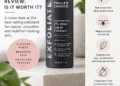
If you love the feeling of incredibly smooth, freshly exfoliated skin, Dr. Brandt Microdermabrasion Skin Exfoliant is one of those products that’s difficult to ignore.
It’s designed to give you some of the skin-polishing benefits associated with microdermabrasion without booking an appointment at a clinic.
But there’s an important distinction here: this isn’t the same thing as professional microdermabrasion.
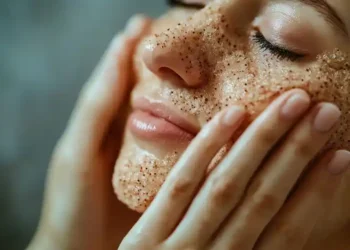
Instead, think of it as a rather luxurious at-home exfoliator that combines physical and chemical exfoliation to remove dead surface cells and leave the skin feeling smoother and looking brighter.
So, is Dr. Brandt Microdermabrasion actually worth the money?
Let’s take a closer look at what it does, how it works, who it’s best suited to, and whether I think it deserves a place in your skincare routine.
Looking for more options? Read our guide to the Best Skin Exfoliators.
What Is Dr. Brandt Microdermabrasion Skin Exfoliant?
Dr. Brandt Microdermabrasion is a facial exfoliating treatment designed to polish away dead surface skin cells.
The idea behind it is fairly simple. Dead cells can accumulate on the surface of your skin and contribute to a complexion that feels rough or looks dull. Exfoliation helps remove some of that buildup.
What makes the Dr. Brandt formula interesting is that it doesn’t rely entirely on a traditional gritty scrub.
It combines physical exfoliation with exfoliating acids, giving you two approaches in one product.
The goal is smoother, softer and fresher-looking skin.
For me, that’s the right way to think about this product. It’s not something that’s going to magically transform your skin overnight or erase wrinkles. It’s an exfoliating treatment designed primarily to improve the appearance and feel of the skin’s surface.

What’s in Dr. Brandt Microdermabrasion?
There are a few ingredients that help explain how this exfoliator works.
Aluminum Oxide Crystals
These tiny crystals provide the physical exfoliating action.
As you gently massage the product across damp skin, they help loosen and remove dead surface cells.
The important word here is gently.
You don’t need to press harder or scrub aggressively to make an exfoliator work better. In fact, doing so is far more likely to leave your skin red, sore or irritated.
Lactic Acid
Lactic acid is an alpha hydroxy acid, or AHA.
Rather than physically rubbing away surface cells, AHAs work chemically to help loosen dead cells on the skin’s surface.
This means Dr. Brandt Microdermabrasion isn’t purely a physical scrub.
Jojoba, Aloe Vera and Chamomile
The formula also includes botanical ingredients such as jojoba, aloe vera and chamomile.
These provide a useful contrast to the more intensive exfoliating ingredients and help make the overall formula feel more balanced.
What Does Dr. Brandt Microdermabrasion Actually Do?
The biggest benefit is quite straightforward:
It exfoliates your skin.
That might not sound particularly glamorous, but good exfoliation can make a surprisingly noticeable difference to the way your complexion looks and feels.
It may be particularly appealing if your skin is:
Dull-looking
Rough or uneven in texture
Slightly flaky
Congested-looking
Lacking that smooth, polished feeling
Removing accumulated surface cells can leave the skin feeling softer almost immediately.
That’s probably the biggest attraction of this particular product.
You get that satisfying, freshly polished feeling that people who love physical exfoliators tend to enjoy.
Is It Really the Same as Microdermabrasion?
No — and I think this is an important distinction.
Professional microdermabrasion is an aesthetic treatment performed using specialist equipment.
Dr. Brandt Microdermabrasion is a topical skincare product inspired by the concept of microdermabrasion.
It uses exfoliating particles and acids to polish the surface of the skin, but I wouldn’t regard it as a substitute for a professional treatment if professional microdermabrasion is what you’re actually looking for.
That doesn’t make it a bad product.
It simply means expectations need to be realistic.
You’re buying a sophisticated facial exfoliator, not a dermatologist’s treatment in a tube.
What Does It Feel Like?
This isn’t one of those facial cleansers containing a few barely noticeable exfoliating particles.
Dr. Brandt Microdermabrasion is designed specifically to exfoliate, so you’ll notice the texture.
The fine particles give it a distinctive polishing feel as you move it across damp skin.
If you enjoy physical exfoliation, that’s probably part of its appeal.
If your skin tends to dislike scrubs, however, the texture alone may tell you that this isn’t going to be your ideal product.
The trick is to let the exfoliator do the work.
There’s absolutely no reason to attack your face with it.
A light touch is much more sensible.
How to Use Dr. Brandt Microdermabrasion
I’d keep the routine around this product very simple.
1. Cleanse Your Skin
Remove makeup, sunscreen and everyday grime before exfoliating.
I wouldn’t use the exfoliator as a substitute for properly cleansing your face first.
2. Apply to Damp Skin
You only need a small amount.
Spread it gently across damp skin, avoiding the delicate eye area.
3. Massage Very Gently
This is the most important part.
Use light circular movements rather than putting lots of pressure behind your fingertips.
Scrubbing harder doesn’t mean you’re removing more imperfections. It simply increases your chances of irritating your skin.
4. Rinse Thoroughly
Rinse the product away carefully and pat your face dry.
Don’t rub your skin aggressively with a towel immediately after exfoliating it.
5. Moisturize
Follow with a gentle moisturizer.
Personally, I think exfoliation days are a good time to keep the rest of your routine uncomplicated rather than throwing another five active ingredients at your face.
How Often Should You Use It?
This definitely isn’t a product I’d treat as a daily scrub.
How often you exfoliate depends on your skin type, the other products in your routine and how your skin responds.
With a stronger exfoliating product, restraint is generally much better than enthusiasm.
Watch what your skin is telling you.
If it starts becoming:
Red
Tight
Sore
Very dry
Flaky
Sensitive
Uncomfortable
Burning or stinging
stop exfoliating and give your skin time to recover.
One of the easiest skincare mistakes to make is assuming that if exfoliating once makes your skin feel smoother, exfoliating much more frequently will make it dramatically better.
Unfortunately, skin doesn’t work like that.
You can absolutely have too much of a good thing.
Does Dr. Brandt Microdermabrasion Make Skin Softer?
This is probably where the product has the most obvious appeal.
Removing dead surface cells can leave the skin feeling immediately smoother.
If your face sometimes has that slightly rough, uneven texture when you run your fingertips across it, a good exfoliating treatment can make quite a noticeable difference.
Just remember that this smoothness is primarily a surface effect.
You haven’t permanently altered your skin after one exfoliation session.
Maintaining healthy-looking skin also means moisturizing, protecting it from the sun and avoiding irritating it through excessive treatment.
Is It Good for Dull Skin?
This is another area where I think an exfoliator can be genuinely useful.
A buildup of dead surface cells can make the complexion appear lackluster.
Removing some of that buildup can reveal fresher-looking skin underneath and temporarily give your complexion a brighter, more polished appearance.
But I’d still keep expectations realistic.
Dull skin can also be influenced by dehydration, sun exposure, lifestyle and other skincare issues.
If your complexion looks tired, exfoliation may help — but it’s unlikely to be the entire answer.
Can It Help With Fine Lines?
I’d be wary of buying any scrub because you expect it to get rid of wrinkles.
Exfoliating the surface can make the skin look smoother, and that may temporarily make very fine lines appear less noticeable.
That’s very different from actually treating established wrinkles.
For long-term skin aging, I put far more importance on the basics:
Daily sunscreen
A good moisturizer
Gentle cleansing
Suitable evidence-based active ingredients
A skincare routine you can stick to
I’d regard exfoliation as an extra rather than the foundation of an anti-aging routine.
What About Dark Spots and Uneven Skin Tone?
Exfoliation may help improve the overall look of an uneven complexion by removing dead surface cells.
But again, I’d resist the temptation to treat pigmentation as something you can simply scrub away.
You can’t.
And scrubbing harder in an attempt to remove dark patches can actually irritate the skin.
If pigmentation is your main concern, sunscreen and appropriate pigmentation-targeting skincare deserve far more attention than aggressive physical exfoliation.
Is Dr. Brandt Microdermabrasion Good for Dry Skin?
Possibly, but I’d approach it carefully.
Dry skin can accumulate flaky surface cells, so exfoliating it sometimes sounds like an obvious solution.
But there’s a catch.
If your skin is already dry and uncomfortable, removing more from its surface can sometimes leave it feeling worse rather than better.
I’d concentrate on getting very dry skin comfortable and moisturized first.
Once your skin barrier feels happier, you can decide whether occasional gentle exfoliation improves the texture.
Is It Suitable for Oily or Combination Skin?
Oily and combination skin types may particularly enjoy the clean, polished feeling produced by physical exfoliation.
But oily skin isn’t indestructible.
It’s still perfectly possible to over-exfoliate it.
Producing more oil doesn’t give you permission to scrub your face twice as hard.
Keep the pressure gentle and judge the product by how your skin responds.
What If You Have Sensitive Skin?
This is the skin type I’d be most cautious about.
Physical exfoliation simply isn’t everyone’s friend.
If your skin regularly stings, flushes, becomes irritated easily or reacts badly to scrubs, there are gentler ways to approach exfoliation.
I would also avoid using this sort of product over skin that’s already:
Sunburned
Inflamed
Chapped
Broken
Very irritated
Sore
Your skin doesn’t need exfoliating when it’s already asking you to leave it alone.
Can You Use Dr. Brandt Microdermabrasion on Acne-Prone Skin?
I’d be careful here too.
Scrubbing across active, inflamed pimples isn’t going to make them disappear faster.
If anything, aggressive rubbing may make already irritated skin feel even more uncomfortable.
This is also worth considering if you’re using acne products such as retinoids, benzoyl peroxide or prescription treatments.
Rather than automatically adding another active product, look at your skincare routine as a whole.
If you’re receiving prescription acne treatment or have significant inflammatory acne, your dermatologist is the best person to advise you about adding exfoliation.
Can You Use It With Retinol?
This is one combination where I wouldn’t automatically pile everything together.
Retinol and other retinoids can already cause dryness, peeling and irritation, especially when you first start using them.
Adding physical and chemical exfoliation on top can simply become too much.
That doesn’t necessarily mean someone who uses retinol can never use an exfoliating product.
It does mean I’d be thoughtful about how I schedule them rather than throwing both onto my skin during the same routine.
More active ingredients don’t automatically equal better skin.
Can You Use It With AHAs or BHAs?
Again, be sensible.
Dr. Brandt Microdermabrasion already combines different forms of exfoliation.
If you’re also regularly using glycolic acid, salicylic acid or other exfoliating treatments, adding even more exfoliation may increase the likelihood of:
Redness
Dryness
Peeling
Burning
Irritation
Sensitivity
I’m a fan of the one exfoliating treatment at a time approach.
Your face isn’t a chemistry experiment.
Who Is Dr. Brandt Microdermabrasion Best For?
I’d say this product makes the most sense for someone who:
Likes physical exfoliation
Doesn’t have particularly sensitive skin
Wants smoother-feeling skin
Is bothered by dullness or rough texture
Prefers a more intensive exfoliating treatment rather than a very mild daily product
Enjoys the luxurious side of skincare
Is prepared to pay more for an exfoliator
On the other hand, I’d probably skip it if:
Your skin is extremely sensitive
Physical scrubs regularly irritate you
Your skin barrier is currently damaged
You have active, inflamed acne across the area
You’re already overloading your routine with exfoliating acids and retinoids
You expect it to erase wrinkles, scars or pigmentation
Dr. Brandt Microdermabrasion Pros and Cons
Pros
Leaves skin feeling very smooth
This is probably its strongest selling point. If you enjoy that polished feeling after exfoliating, this is exactly the sort of product designed to deliver it.
Can brighten dull-looking skin
Removing accumulated surface cells can leave your complexion looking fresher.
Combines physical and chemical exfoliation
You’re not relying entirely on the scrubbing action of a traditional facial scrub.
A little goes a long way
You don’t need to cover your face with a thick layer of product.
Feels more like a treatment
If you enjoy making skincare feel a little luxurious, this has more of a treatment feel than an everyday cleanser.
Cons
It may be too much for sensitive skin
Not everyone gets along with physical exfoliation.
It’s easy to overdo it
Using too much pressure or exfoliating too frequently may result in irritation.
It’s relatively expensive
There are much cheaper ways to exfoliate your face.
It isn’t professional microdermabrasion
Despite the name, you shouldn’t expect the same treatment you’d receive from professional microdermabrasion equipment.
It won’t fix every skincare concern
Wrinkles, acne and pigmentation generally require more targeted approaches.
Is Dr. Brandt Microdermabrasion Worth the Price?
This is probably the question that matters most.
Because let’s face it: you can buy an exfoliator for considerably less money.
So whether Dr. Brandt Microdermabrasion represents good value really depends on what you’re looking for.
If you simply want to remove dead surface cells occasionally, there are plenty of less expensive exfoliating products.
If, however, you love physical exfoliation and particularly enjoy that ultra-smooth, freshly polished feeling, I can understand why Dr. Brandt has developed such a following.
It’s the sort of skincare product you buy partly because of the experience.
My advice would be not to fall into the trap of thinking a higher price automatically means proportionally better skin.
It’s an indulgent exfoliating treatment — not an essential piece of skincare.
How I’d Fit It Into a Skincare Routine
I’d make exfoliation day deliberately boring.
Something along these lines:
Evening
Gentle cleanser
Dr. Brandt Microdermabrasion Skin Exfoliant
Gentle moisturizer
That’s it.
I wouldn’t feel compelled to follow it with several acids, a retinoid, a strong peel and every serum in the bathroom cabinet.
You’ve already exfoliated.
Let your skin enjoy the rest of the evening off.
The Next Morning
Stick with gentle skincare and don’t forget your sunscreen.
Sun protection should already be part of your daily skincare routine, regardless of whether you’re exfoliating.
Frequently Asked Questions
1. Is Dr. Brandt Microdermabrasion actual microdermabrasion?
No. It’s an at-home exfoliating skincare product inspired by microdermabrasion. Professional microdermabrasion uses specialist equipment and shouldn’t be confused with a facial scrub or exfoliating cream.
2. Can I use Dr. Brandt Microdermabrasion every day?
I wouldn’t treat this as an everyday facial scrub. Stronger exfoliation should be used carefully, and how often is appropriate will depend on your skin and the other products you’re using.
3. Does it help acne?
It’s an exfoliator rather than an acne treatment. I’d be particularly careful about physically exfoliating inflamed breakouts.
4. Does it remove wrinkles?
No. It may temporarily make the skin look smoother, but an exfoliating product can’t simply erase wrinkles.
5. Can it help blackheads?
Exfoliation may help with surface buildup, but blackheads form within pores and often respond better to more targeted skincare approaches.
6. Is Dr. Brandt Microdermabrasion good for sensitive skin?
I’d approach it cautiously. People with sensitive or reactive skin may find physical exfoliation uncomfortable.
7. Should you moisturize after using it?
Yes. I think following exfoliation with a gentle moisturizer is one of the simplest ways to keep your routine balanced.
8. Can you use it before applying makeup?
You can exfoliate as part of your general skincare routine, but I wouldn’t experiment with a strong exfoliator immediately before an important event.
If your skin unexpectedly becomes red or irritated, you’ll wish you’d left it alone.
Final Verdict: Is Dr. Brandt Microdermabrasion Worth Buying?
I think Dr. Brandt Microdermabrasion makes the most sense for someone who genuinely enjoys physical exfoliation and wants an occasional treatment that leaves the skin feeling noticeably smoother and more polished.
That’s its real strength.
I’d be much less interested in it if I had very sensitive, irritated or reactive skin, or if my existing routine was already packed with acids and retinoids.
And I definitely wouldn’t buy it expecting miracle results.
It isn’t going to erase wrinkles, remove deep pigmentation or replace professional microdermabrasion.
What it can offer is a satisfying exfoliating treatment that helps tackle dull surface buildup and leaves the complexion feeling smoother and fresher.
For the right skin type, that may be exactly what you’re looking for.
My overall verdict: a luxurious and effective-feeling option for fans of physical exfoliation, but definitely one to use with a light touch.
View on Dr. Brandt Amazon.com >
Read next: The Best Skin Exfoliators – Our Top 5 Picks