
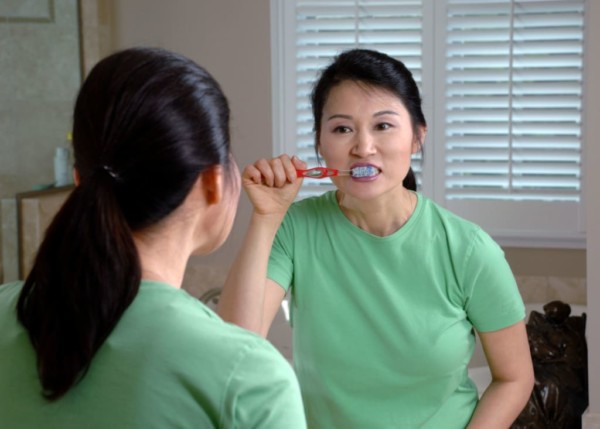
Salt toothpaste is one of those oral-care products that can make me stop and wonder whether something so simple can really make a difference. Salt has been used in oral hygiene for generations, and today you can find it in a variety of toothpastes marketed around natural, mineral-based or traditional dental care.
But does salt toothpaste actually have benefits? Is it better than regular toothpaste? And which products are worth trying?
The short answer is that salt can be a useful ingredient in toothpaste, but I wouldn’t automatically assume that a toothpaste containing salt is better than a conventional fluoride toothpaste.
For everyday dental care, I think the most important thing is looking at the whole formula, especially whether it contains fluoride, rather than choosing a product simply because it says “salt toothpaste” on the label.
Let’s take a closer look.
What Is Salt Toothpaste?
Salt toothpaste is toothpaste that contains salt, usually sodium chloride, as one of its ingredients.
Some formulas have a distinctly salty flavor, while others combine salt with ingredients such as mint, herbs, baking soda or other minerals.
Salt toothpaste is often associated with natural or traditional oral care, and some people enjoy it because it gives them a different experience from conventional sweet-tasting toothpaste.
The important thing to remember is that salt toothpaste isn’t one specific formula. Different brands can contain very different ingredients.
That’s why I always recommend looking at the ingredient list rather than judging a toothpaste by its name alone.
What Are the Benefits of Salt Toothpaste?
1. It Helps Clean the Teeth
The main purpose of toothpaste is to assist with cleaning while you’re brushing.
Salt-containing toothpaste can contribute to the overall cleansing action of brushing, helping remove food debris and plaque from the teeth.
Of course, the toothpaste is only part of the equation. Brushing properly and cleaning between the teeth are still essential.
2. It Can Leave Your Mouth Feeling Clean
One thing I notice about salt toothpaste is that it can create a very distinctive clean-mouth sensation.
The flavor can be quite different from the sweet, intensely minty taste of many mainstream toothpastes.
Some people love that salty freshness, while others need a little time to get used to it.
3. It Can Be Part of a Good Oral-Care Routine
Salt toothpaste can be perfectly compatible with a good oral-hygiene routine, depending on its ingredients.
The basics still matter most:
- Brush twice a day.
- Use a soft-bristled toothbrush.
- Clean between your teeth.
- Don’t brush aggressively.
- Have regular dental checkups.
A salt toothpaste isn’t a replacement for any of these habits.
4. Some Salt Toothpastes Contain Other Useful Ingredients
This is one reason I think it’s important to compare products rather than simply choosing the first salt toothpaste you see.
Depending on the brand, a formula may contain ingredients such as:
- Fluoride
- Baking soda
- Herbal extracts
- Mint
- Mineral salts
- Essential oils
- Ingredients intended for sensitive teeth
The additional ingredients can make a bigger difference to the toothpaste’s overall function than the salt itself.
5. It May Appeal to People Who Prefer Natural-Style Products
If you’re interested in mineral-based, herbal or natural-style beauty and personal-care products, salt toothpaste can be an appealing option.
But there’s something I always remind myself when shopping for natural products: natural doesn’t automatically mean more effective.
When it comes to toothpaste, I want something that actually supports my dental health—not simply something with an appealing ingredient list.
Does Salt Toothpaste Prevent Cavities?
This is probably the most important question.
Salt itself isn’t the ingredient I would rely on for cavity protection.
Fluoride has a well-established role in preventing tooth decay and strengthening tooth enamel.
For that reason, if I’m choosing an everyday toothpaste, I’d pay close attention to whether it contains fluoride.
A salt toothpaste can contain fluoride, so you don’t necessarily have to choose between salt and fluoride. The two can appear in the same formula.
If you are prone to cavities, I’d be particularly cautious about switching from a fluoride toothpaste to a fluoride-free alternative without discussing it with your dentist.
Salt Toothpaste vs. Regular Fluoride Toothpaste
Here’s how I’d compare them:
Feature |
Salt Toothpaste |
Fluoride Toothpaste |
|---|---|---|
Helps clean teeth |
Yes |
Yes |
Can freshen breath |
Yes |
Yes |
Contains salt |
Usually |
Sometimes |
Helps strengthen enamel |
Salt itself doesn’t provide this benefit |
Fluoride does |
Cavity protection |
Depends on formula |
Fluoride provides proven protection |
Natural-style options available |
Yes |
Yes |
Suitable for everyday use |
Depends on formulation |
Generally yes |
The important takeaway is that salt and fluoride aren’t necessarily competing ingredients.
You can choose a toothpaste containing salt that also provides fluoride protection.
Top 5 Salt Toothpaste Options to Consider
If you’re shopping on Amazon.com, these are five products or brands I’d put on my comparison list.
1. Weleda Salt Toothpaste
Weleda Salt Toothpaste is probably one of the best-known products if you’re specifically interested in a traditional salt toothpaste.
It’s formulated around mineral salt and herbal ingredients and has the distinctive salty taste you’d expect.
This is one I’d consider if the whole reason you’re interested in salt toothpaste is that you want something noticeably different from ordinary mint toothpaste.
Best for: People looking specifically for a traditional salt toothpaste.
Keep in mind: Check the exact product’s current ingredient list and fluoride status before buying.
2. Himalaya Complete Care Toothpaste
Himalaya Complete Care is more of an herbal toothpaste than a traditional salt toothpaste, but it’s worth considering if you’re interested in natural-style oral care.
The brand focuses heavily on botanical ingredients, making this a reasonable option for people who prefer herbal formulations.
Best for: Anyone interested in herbal oral care rather than a strictly salt-focused toothpaste.
3. Redmond Earthpaste
Redmond Earthpaste is another product that appeals to people looking for mineral-focused and natural-style oral care.
It is particularly interesting if you prefer toothpaste formulations that emphasize mineral ingredients.
Best for: Shoppers who like mineral-based, natural-style toothpaste.
Important: Check the exact version you’re buying, as formulations can differ and some products may not contain fluoride.
4. Arm & Hammer Advance White
Arm & Hammer Advance White isn’t a traditional salt toothpaste, but I think it’s worth including because baking soda often gets mentioned alongside salt and mineral-based oral care.
Baking soda is sodium bicarbonate, not table salt, so the two shouldn’t be confused. However, it is another familiar mineral ingredient used in toothpaste.
This is a good option for someone who wants a mainstream toothpaste while still being interested in baking-soda-based cleaning.
Best for: People who want a conventional toothpaste containing baking soda.
5. Tom’s of Maine Toothpaste
Tom’s of Maine offers a wide selection of natural-style toothpastes, including formulas designed around different oral-care needs.
Rather than assuming every Tom’s toothpaste is equivalent, I’d look at the individual formula and choose according to whether you want fluoride, sensitivity support, whitening or another specific benefit.
Best for: Shoppers who like natural-style toothpaste and want several formulations to compare.
What Should I Look for in Salt Toothpaste?
When I’m comparing toothpastes, I don’t simply look for the word “salt.”
I’d check several things.
Fluoride Content
If you’re looking for an everyday toothpaste to help prevent cavities, fluoride is one of the first things I’d check.
A salt toothpaste containing fluoride may give you the best of both worlds if you specifically enjoy salt-based formulas.
The Abrasiveness
More abrasive doesn’t necessarily mean cleaner teeth.
If you brush too hard or use a highly abrasive toothpaste, you may contribute to wear of the tooth surface.
I’d rather use a gentle toothpaste with good brushing technique than scrub aggressively with a gritty product.
Your Dental Needs
Your perfect toothpaste depends on your mouth.
Someone with sensitive teeth may want a sensitivity-focused toothpaste, while someone prone to cavities may prioritize fluoride.
If you have gum disease, enamel erosion or significant sensitivity, it’s worth getting professional advice rather than choosing a toothpaste solely because it’s marketed as natural.
Can Salt Toothpaste Whiten Teeth?
This is another area where I think marketing claims can get confusing.
Salt toothpaste may help remove some surface staining as part of the normal cleaning process.
But that’s not the same thing as actually bleaching the teeth.
If your teeth are naturally darker or have deeper discoloration, simply switching to salt toothpaste isn’t likely to transform their color.
For significant whitening, I’d look at proven whitening products or professional dental treatment instead.
Can Salt Toothpaste Help Your Gums?
A good brushing routine is essential for healthy gums, and salt toothpaste can be part of that routine.
However, I wouldn’t consider salt toothpaste a treatment for gum disease.
If your gums are regularly bleeding, swollen, painful, red or receding, I’d make an appointment with a dentist or dental hygienist.
Changing toothpaste may help you find a more comfortable product, but it shouldn’t replace professional care when there’s an underlying dental problem.
Is Salt Toothpaste Abrasive?
Some salt and mineral toothpastes can feel gritty.
That’s not necessarily bad, but it does mean I wouldn’t brush aggressively.
The goal is to clean your teeth—not scrub them as though you’re cleaning a kitchen surface!
Use a soft toothbrush, gentle pressure and a sensible brushing technique.
If your teeth become sensitive after using a particular toothpaste, consider switching to a gentler formula.
Can I Make My Own Salt Toothpaste?
You may come across DIY recipes containing salt, baking soda, coconut oil and other kitchen ingredients.
Personally, I wouldn’t make homemade toothpaste my primary everyday toothpaste.
Commercial toothpastes are formulated to balance cleaning, abrasiveness, active ingredients and other properties. If cavity prevention is important to you, replacing a properly formulated fluoride toothpaste with a homemade mixture isn’t something I’d recommend.
There’s a big difference between experimenting with an occasional DIY oral-care recipe and relying on it for long-term dental protection.
Is Salt Toothpaste Safe?
Commercial salt toothpaste can generally be used safely when the product is appropriately formulated and used according to its instructions.
However, more isn’t better.
Don’t brush harder because you think the salt will clean your teeth more effectively. And if you experience irritation, burning, increased sensitivity or discomfort, stop using the product.
I’d also avoid using loose table salt as a substitute for toothpaste.
Salt Toothpaste FAQs
1. Is salt toothpaste better than ordinary toothpaste?
Not necessarily. Salt can be a useful ingredient, but it doesn’t automatically make a toothpaste better. For cavity protection, fluoride is much more important.
2. Can I use salt toothpaste every day?
It depends on the specific formulation. Check the product’s instructions and ingredients. If it’s fluoride-free, consider whether it provides the cavity protection you need from an everyday toothpaste.
3. Does salt toothpaste remove plaque?
Brushing is the key factor in physically removing plaque. Salt toothpaste can be used while brushing, but it isn’t a substitute for proper brushing and interdental cleaning.
4. Does salt toothpaste whiten teeth?
It may help remove some surface stains, but it shouldn’t be confused with a professional whitening treatment or a dedicated whitening system.
5. Can salt toothpaste prevent cavities?
Salt itself isn’t a substitute for fluoride when it comes to cavity prevention. If you’re concerned about decay, look for a fluoride toothpaste unless your dentist recommends otherwise.
6. Can I use table salt to brush my teeth?
I wouldn’t recommend replacing toothpaste with dry table salt. It doesn’t provide the balanced formulation of a proper toothpaste and doesn’t provide fluoride’s established cavity-protection benefits.
7. Is salt toothpaste good for sensitive teeth?
That depends on the individual product. Some salt or mineral toothpastes may feel too abrasive for people with sensitivity. If your teeth are sensitive, look for a toothpaste specifically formulated for sensitivity.
8. Can salt toothpaste make teeth stronger?
Salt itself isn’t responsible for strengthening enamel. Fluoride is the ingredient I’d look for if strengthening enamel and preventing decay are priorities.
9. Does salt toothpaste kill bacteria?
Salt can affect the environment in which microorganisms live, but salt toothpaste shouldn’t be considered a treatment for bacterial dental infections or gum disease.
My Final Thoughts
I can see why salt toothpaste appeals to so many people. It’s simple, different and has a long history in oral hygiene.
And if you enjoy that distinctive salty taste, there’s no reason you can’t explore commercially formulated salt toothpastes.
But I wouldn’t get too caught up in the idea that salt automatically makes toothpaste healthier.
For me, the most sensible approach is to look at the entire formula. If I’m choosing an everyday toothpaste, I’d prioritize fluoride for cavity protection, then consider other ingredients based on my personal preferences and dental needs.
If you’re specifically looking for a salt toothpaste, Weleda Salt Toothpaste is an obvious product to investigate. For a broader natural or mineral-based approach, Himalaya, Redmond Earthpaste and Tom’s of Maine are also worth comparing, while Arm & Hammer is an interesting mainstream option for those who like baking-soda-based toothpaste.
And as always, if you have ongoing sensitivity, bleeding gums, cavities, enamel problems or other dental concerns, I’d let your dentist guide your choice.
A good toothpaste is helpful, but it’s only one small piece of the bigger picture. Regular brushing, cleaning between your teeth, sensible eating habits and professional dental care still do most of the heavy lifting when it comes to keeping your smile healthy.