
Summer is one of the easiest seasons for eating well. Fresh fruit tastes sweeter, salads feel more appealing, and nobody wants to spend hours cooking a heavy meal in a hot kitchen.
The best slimming summer foods are colourful, refreshing and easy to prepare. Many are naturally high in water or fibre, which can help meals feel satisfying without adding lots of calories. However, no individual food magically burns fat. Healthy weight loss still comes down to your overall diet, portions, activity levels and daily habits.
View more Food Tips and Tricks >
Here are some of my favourite tasty and slimming summer food and simple ways to enjoy them.
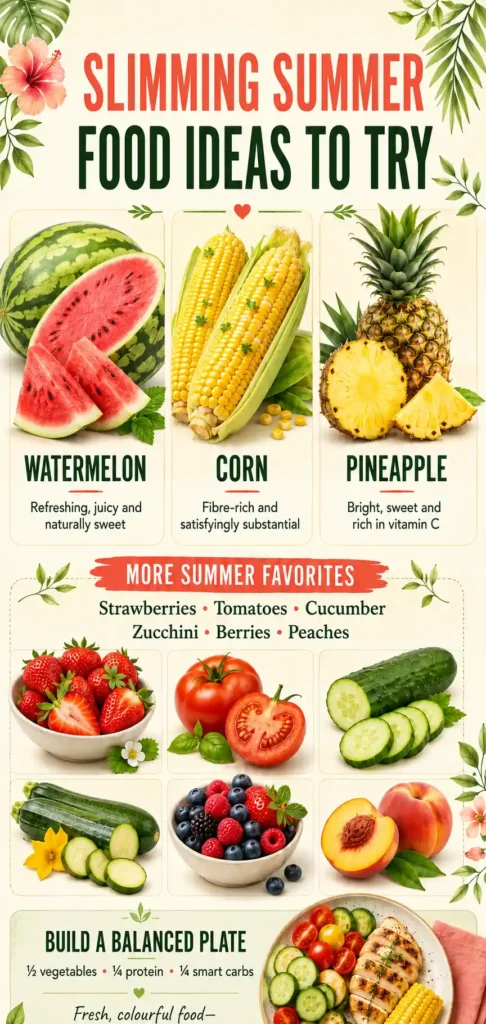
1. Watermelon
Few foods say summer quite like a cold slice of watermelon. It is sweet, juicy and mostly water, making it a refreshing alternative to ice cream, pastries and other calorie-dense desserts.
Watermelon also supplies vitamin C and contains lycopene, the red plant pigment also found in tomatoes. Although it is nutritious, it does not contain much protein or fibre, so I find it more satisfying when combined with another food.
Try serving watermelon:
With feta, cucumber and fresh mint
Blended with ice and lime juice
Cut into cubes and chilled for a simple dessert
On a skewer with berries
Alongside Greek yogurt
A watermelon and feta salad is particularly good at a summer barbecue. Just keep an eye on how much feta and dressing you add, as these can quickly increase the meal’s calorie and salt content.
2. Corn on the Cob
Corn sometimes receives unfair criticism because it is starchier than leafy vegetables. However, fresh corn can still be part of a healthy weight-management diet. It provides carbohydrates, fibre and several vitamins and minerals.
Corn is also satisfyingly chewy and substantial, so it can make a light summer meal feel more complete. The real issue is often what we put on it. A modest serving of grilled or boiled corn is very different from corn covered in butter, creamy sauce and cheese.
For a lighter version, season corn with:
Lime juice and chilli powder
Smoked paprika
Fresh herbs and black pepper
A small amount of grated Parmesan
Plain Greek yogurt mixed with lime
I love grilling corn until it has a little colour and then squeezing fresh lime over the top. It has plenty of flavour without needing a thick layer of butter.
3. Pineapple
Pineapple is naturally sweet enough to feel like a treat, yet it also provides vitamin C and some fibre. Its intense flavour means that a relatively modest portion can brighten an entire meal.
You may have heard claims that pineapple “burns fat” because it contains bromelain, a group of enzymes involved in breaking down proteins. Pineapple is nutritious, but there is no good reason to treat it as a shortcut to weight loss.
Enjoy it because it is delicious—not because of exaggerated detox or fat-burning promises.
Fresh pineapple works well:
Grilled and served with Greek yogurt
Chopped into a fruit salad
Added to fresh salsa
Mixed with cottage cheese
Frozen and blended into a simple sorbet
Served with grilled chicken, fish or shrimp
Choose pineapple canned in juice rather than heavy syrup if fresh pineapple is unavailable. Drain it before serving.
4. Strawberries
Strawberries are one of the easiest ways to satisfy a sweet craving during summer. They provide vitamin C, water and fibre, while their natural sweetness makes them a useful replacement for cakes or candy.
Instead of serving strawberries with lots of whipped cream and sugar, try them with plain Greek yogurt, a few chopped nuts and a drizzle of honey. This combination adds protein and healthy fats, helping the snack keep you satisfied for longer.
Frozen strawberries are also ideal for smoothies. Blend them with milk or an unsweetened dairy alternative, yogurt and ice for a creamy drink without needing ice cream.
5. Tomatoes
Ripe summer tomatoes are full of flavour and require very little preparation. They contain vitamin C, potassium and lycopene, while being naturally low in calories.
Tomatoes can add volume, colour and juiciness to almost any meal. Use them in salads, sandwiches, salsa or chilled gazpacho. I particularly like sliced tomatoes with basil, black pepper and a small amount of mozzarella.
Be aware that bottled tomato sauces, ketchup and premade salsa may contain added sugar or a considerable amount of sodium. Fresh tomatoes give you more control over what goes into your meal.
6. Cucumbers
Cucumbers have a very high water content, giving them their cooling, crisp texture. They are perfect when you want to add plenty of volume to a plate without making the meal feel heavy.
Try cucumber:
Chopped into salads
Dipped in hummus
Added to sparkling water
Mixed with yogurt, garlic and herbs
Layered in sandwiches
Combined with watermelon and mint
Cucumber alone will not keep you full for very long, so pair it with protein or a fibre-rich food. Tuna, eggs, beans, hummus, yogurt and grilled chicken are all useful options.
7. Zucchini
Zucchini is an incredibly versatile summer vegetable. It can be grilled, roasted, stuffed or cut into ribbons. It is mild enough to absorb almost any seasoning, which makes it helpful when you want to lighten a familiar meal.
Zucchini noodles can replace some—but not necessarily all—of the pasta in a dish. I prefer mixing zucchini noodles with a smaller portion of regular pasta. This keeps the comforting texture and carbohydrates while adding more vegetables and volume.
You can also grill thick zucchini slices and serve them with lean protein, corn and a fresh tomato salad.
8. Berries
Blueberries, raspberries and blackberries are small but nutritionally valuable. They provide fibre, vitamins and various beneficial plant compounds.
Raspberries and blackberries are particularly useful when you want to increase the fibre in a breakfast or snack. Add them to oatmeal, overnight oats, yogurt or cottage cheese.
A bowl of frozen berries can also make a lovely evening snack. Allow them to thaw slightly and mix in a spoonful of yogurt for a texture similar to frozen dessert.
9. Peaches
A ripe peach is juicy, fragrant and naturally portioned, making it a convenient summer snack. Peaches provide water, fibre and vitamin C, while offering plenty of sweetness without the added sugar found in many desserts.
For something special, cut a peach in half, remove the pit and grill it briefly. Serve it warm with plain Greek yogurt and cinnamon. It tastes indulgent but can be considerably lighter than pie, cobbler or ice cream.
Peaches are also delicious in salads with arugula, chicken, cucumber and a little goat cheese.
10. Leafy Greens
Lettuce, spinach, arugula and other leafy greens make it easy to build a large, colourful meal. However, a bowl of plain leaves is unlikely to keep you satisfied for long.
A well-balanced summer salad should include:
Leafy greens or other vegetables
A source of protein, such as chicken, fish, eggs, tofu or beans
A sensible portion of carbohydrates, such as corn, quinoa or potatoes
A little healthy fat, such as avocado, seeds or olive oil
A flavoursome dressing
The dressing deserves attention. A salad can become surprisingly calorie-dense when it contains large amounts of oil, cheese, croutons, bacon and creamy dressing. You do not have to avoid these ingredients completely—just use them as accents rather than the main event.
11. Greek Yogurt
Plain Greek yogurt is a useful warm-weather food because it is cool, creamy and rich in protein. Protein generally makes a snack or meal more satisfying than fruit alone.
Use Greek yogurt as:
A base for fruit and berries
A replacement for some sour cream or mayonnaise
A topping for grilled peaches or pineapple
A base for cucumber and herb dip
An ingredient in smoothies
A frozen snack with chopped fruit
Flavoured yogurts can contain a significant amount of added sugar. Plain yogurt lets you control the sweetness by adding fresh fruit or a small drizzle of honey.
12. Grilled Fish or Chicken
Fruit and vegetables are important, but protein is what turns them into a satisfying meal. Grilled fish, chicken, shrimp, tofu or tempeh all work beautifully with summer produce.
Try combining grilled chicken with corn and tomato salsa, or serve fish with pineapple salsa and a cucumber salad. These meals feel fresh and colourful without being overly heavy.
Avoid charring food until it is blackened, and use sugary marinades sparingly because they can burn quickly on the grill.
How to Build a Slimming Summer Foods Plate
You do not need to count every lettuce leaf or avoid your favourite barbecue foods.
A simple plate structure can make summer eating much easier:
Fill about half the plate with vegetables or salad.
Add a palm-sized portion of protein.
Include a sensible serving of corn, potatoes, whole grains or another carbohydrate.
Use sauces, cheese and dressings in moderate amounts.
Finish with fresh fruit if you want something sweet.
The USDA’s MyPlate guidance similarly encourages building meals around a variety of food groups, with fruits and vegetables taking up a substantial part of the plate.
Summer Foods That Can Be Surprisingly Heavy
A food does not have to be forbidden to affect your progress.
Some classic summer options simply need a little portion awareness:
Sweetened iced tea and lemonade
Large fruit smoothies
Creamy potato or pasta salads
Sugary barbecue sauces
Ice cream and frozen coffee drinks
Chips with unlimited dips
Alcoholic cocktails
Salads drenched in oil-based dressing
Liquid calories are especially easy to overlook because drinks do not always satisfy hunger in the same way as solid food. Water, sparkling water, unsweetened iced tea and water infused with cucumber, citrus or berries are lighter everyday choices.
My Final Thoughts
Slimming summer foods should not feel like punishment. Watermelon, corn, pineapple, berries, tomatoes and peaches prove that nutritious food can still be colourful, juicy and genuinely enjoyable.
The key is to build meals that combine fresh produce with protein, fibre and sensible portions of fat and carbohydrates. Watermelon makes a refreshing snack, corn adds substance to a salad or barbecue plate, and pineapple brings sweetness to both savoury dishes and desserts.
Eat them because you enjoy them, experiment with simple recipes and remember that your overall pattern matters far more than any single “superfood.”
For detailed food-composition information, the USDA’s FoodData Central provides searchable nutrient data for fruits, vegetables and other foods.

















Thank you so much!