
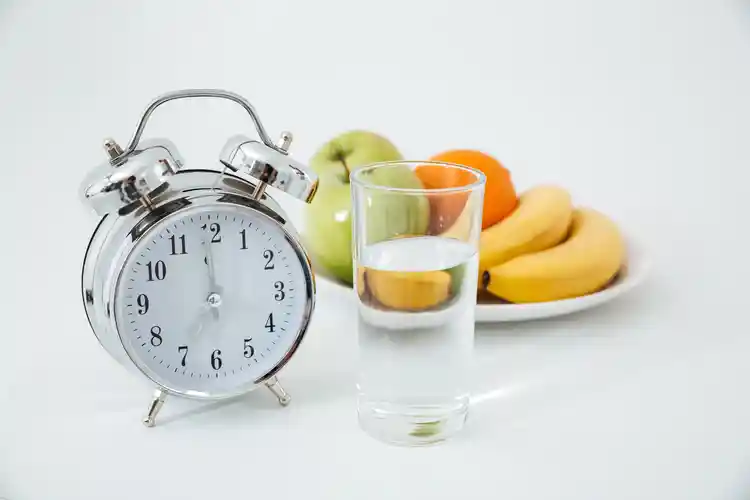
Intermittent fasting has become one of those health trends that seems to be everywhere. One friend swears by skipping breakfast, another stops eating after 7 p.m., and someone else is doing a full 24-hour fast once a week.
But underneath all the hype is a fairly simple idea: intermittent fasting is less about what you eat and more about when you eat.
So, does intermittent fasting really work? And what actually happens to your body when you go for longer periods without food?
View more Weight Loss ideas >
Here’s a straightforward look at how intermittent fasting works, the potential benefits and drawbacks, and whether it might be worth trying.
What Is Intermittent Fasting?
Intermittent fasting, often shortened to IF, is an eating pattern that alternates between periods of eating and fasting.
Unlike a conventional diet, intermittent fasting doesn’t necessarily tell you which foods you can and can’t eat. Instead, it gives you a particular window in which you eat.
For example, someone following a 16:8 schedule might eat between 11 a.m. and 7 p.m. and then fast for the remaining 16 hours.
Of course, you’re already fasting every night while you sleep. Intermittent fasting essentially extends this natural fasting period by delaying your first meal, eating dinner earlier, or doing a combination of the two.
How Does Intermittent Fasting Work?
When you eat a meal, your body receives a fresh supply of energy, particularly glucose from carbohydrates.
Insulin helps move glucose out of your bloodstream so it can be used for energy or stored for later.
During the hours after eating, your body has plenty of readily available fuel. As more time passes without food, insulin levels generally fall and your body increasingly draws upon stored energy.
This includes glycogen stored primarily in the liver and muscles and, over longer fasting periods, a greater proportion of energy coming from stored fat.
This metabolic shift is one reason fasting has attracted so much attention.
However, there’s an important point that’s sometimes lost in social-media explanations of fasting: fasting doesn’t magically make body fat disappear.
For weight loss to occur over time, you generally still need to consume less energy than your body uses.
Intermittent fasting may simply make that easier for some people.
The Most Popular Types of Intermittent Fasting
There isn’t just one way to practise intermittent fasting.
12:12 fasting
This is one of the gentlest approaches. You fast for 12 hours and have a 12-hour eating window.
For example:
7 a.m. – 7 p.m.: Eating window
7 p.m. – 7 a.m.: Fasting window
Much of the fasting happens while you’re asleep, making this relatively easy to incorporate into everyday life.
14:10 fasting
Here you fast for 14 hours and eat during a 10-hour window. You might finish dinner at 7 p.m. and have breakfast at 9 a.m.
It’s a relatively moderate form of time-restricted eating.
16:8 fasting
Probably the best-known form of intermittent fasting, the 16:8 approach involves fasting for 16 hours and eating within an eight-hour window.
Someone might eat between noon and 8 p.m., for example.
5:2 diet
The 5:2 approach works slightly differently.
You eat normally on five days of the week and significantly reduce your calorie intake on two non-consecutive days.
Alternate-day fasting
This involves alternating regular eating days with fasting or very-low-calorie days.
It’s considerably more restrictive and can be harder to maintain.
24-hour fasting
Some people occasionally fast for an entire 24-hour period — from dinner one evening until dinner the following evening, for example.
Longer fasts aren’t automatically better, though, and they can increase the likelihood of hunger, headaches, dizziness and overeating afterwards.
Does Intermittent Fasting Actually Help You Lose Weight?
It can.
Research suggests that intermittent fasting can help some people lose weight, but it doesn’t appear to possess a mysterious fat-burning advantage over conventional calorie restriction.
One of the biggest reasons it can work is surprisingly practical.
If you normally eat breakfast, lunch, dinner and several evening snacks but suddenly restrict your eating to an eight- or ten-hour period, there are simply fewer opportunities to eat.
That may naturally reduce your overall calorie intake.
Imagine, for example, that your normal evening involves dinner followed by biscuits at 9 p.m. and another snack while watching television.
If your eating window finishes at 7 p.m., those extra calories may disappear without you consciously counting them.
Over weeks and months, that can make a meaningful difference.
The catch is that it doesn’t work if you compensate by eating significantly more during your eating window.
An eight-hour eating window isn’t an eight-hour all-you-can-eat buffet.
What Happens to Your Body While You’re Fasting?
Your metabolism doesn’t suddenly switch from “food burning” to “fat burning” the minute your fasting timer reaches a particular number.
It’s a gradual process.
After a meal, you’re digesting and absorbing nutrients. Insulin rises in response to food, particularly carbohydrates and protein, and glucose is readily available.
As the fasting period continues, insulin falls and your body starts relying more heavily on stored energy.
Liver glycogen helps maintain blood glucose between meals. As fasting continues and glycogen availability decreases, fat oxidation generally increases.
During longer fasting periods, the liver can also produce molecules called ketones from fatty acids.
Ketones provide an alternative energy source for tissues, including the brain.
This doesn’t mean you need to reach ketosis for intermittent fasting to “work.” Many of the practical benefits of time-restricted eating may simply come from improving eating patterns and reducing calorie intake.
What About Autophagy?
Autophagy is probably one of the most fascinating — and overhyped — subjects surrounding fasting.
The word essentially refers to cellular recycling. Cells break down and reuse damaged or unnecessary components.
It’s a normal biological process happening in your body all the time.
Fasting and nutrient deprivation can influence pathways associated with autophagy, and animal research has generated considerable scientific interest.
However, claims such as “autophagy starts exactly 16 hours into a fast” are far too simplistic.
Human biology doesn’t operate according to a fasting stopwatch, and researchers are still investigating how fasting duration, diet, exercise and individual metabolism affect autophagy in people.
So while the science is interesting, autophagy probably shouldn’t be your main reason for trying intermittent fasting.
Potential Benefits of Intermittent Fasting
Weight management is the obvious attraction, but researchers have investigated several other potential benefits.
It May Improve Insulin Sensitivity
Reducing the amount of time spent eating may improve certain markers of glucose regulation and insulin sensitivity in some people.
This is particularly interesting because chronically impaired insulin sensitivity is associated with metabolic diseases such as type 2 diabetes.
However, results vary considerably between individuals, and anyone taking diabetes medication should get medical advice before fasting because of the risk of low blood sugar.
It May Simplify Healthy Eating
This benefit isn’t particularly glamorous, but it matters.
Intermittent fasting can make eating feel simpler.
Instead of worrying about six tiny meals throughout the day, some people prefer having two or three satisfying meals during a defined window.
There are fewer decisions and potentially fewer opportunities for mindless snacking.
It May Help Reduce Late-Night Eating
Late-night snacking can contribute a surprising number of calories to someone’s diet.
Creating a simple rule such as “I finish eating after dinner” may remove this habit.
Interestingly, research into circadian rhythms also suggests that the timing of food intake may matter independently of calories.
Our bodies aren’t metabolically identical at every hour of the day.
This has led to growing interest in early time-restricted eating, where more food is consumed earlier in the day rather than saving a large proportion of calories for late at night.

Is Intermittent Fasting Better Than Normal Dieting?
Not necessarily.
When researchers compare intermittent fasting with traditional calorie-restricted diets, both approaches can produce weight loss.
The biggest question may therefore be:
Which approach can you actually stick to?
Some people hate counting calories but find it incredibly easy to stop eating after dinner and delay breakfast slightly.
Others wake up starving and feel miserable if they don’t eat breakfast.
Neither person is doing anything wrong.
The most effective eating pattern is generally one that’s nutritionally adequate, fits your lifestyle and can realistically be maintained.
What Can You Drink During a Fast?
Water is the simplest choice.
Unsweetened tea and black coffee are also commonly included during fasting periods because they contain very few calories.
Once you start adding sugar, honey, cream, milk or flavoured syrups, you’re technically introducing calories and nutrients.
For someone using intermittent fasting mainly to control calorie intake, a tiny splash of milk isn’t necessarily going to ruin their progress.
It’s more useful to look at your overall eating pattern than become obsessed with whether a few calories have “broken” a fast.
What Should You Eat During Your Eating Window?
Food quality still matters.
You could technically follow a 16:8 fasting schedule while living on pizza, sweets and fizzy drinks, but that doesn’t turn them into a nutritionally balanced diet.
Try to build your meals around foods such as:
Vegetables and fruit
Beans and lentils
Whole grains
Nuts and seeds
Eggs
Fish
Lean meat, if you eat it
Dairy or suitable alternatives
Healthy sources of fat such as olive oil and avocado
Protein is particularly useful because it supports muscle maintenance and helps meals feel satisfying.
Fibre is equally valuable for digestive health and fullness.
Does Intermittent Fasting Slow Your Metabolism?
This is a common worry.
Short periods without food aren’t the same as prolonged starvation.
Your metabolism doesn’t suddenly shut down because you haven’t eaten breakfast.
However, prolonged or aggressive calorie restriction can eventually cause metabolic adaptations. Losing weight itself also reduces the amount of energy your body requires because there’s less body tissue to maintain and move around.
This is one reason extreme fasting isn’t necessarily better than moderate fasting.
You still need adequate calories, protein, vitamins, minerals and essential fats.
What Are the Downsides?
Intermittent fasting isn’t automatically healthy simply because you’re fasting.
Some people experience:
Hunger
Irritability
Headaches
Low energy
Dizziness
Difficulty concentrating
Constipation
Poor exercise performance
Trouble sleeping
Overeating once the fast finishes
Many of these problems are more noticeable when someone suddenly jumps into a long fasting schedule.
If you’re accustomed to eating breakfast at 7 a.m., immediately deciding that you’re never going to eat before 1 p.m. again can be quite a shock.
A gradual approach is usually much easier.
Can Women Do Intermittent Fasting?
Women can certainly practise intermittent fasting, but more fasting isn’t necessarily better.
Energy availability is important for hormonal and reproductive health. Very restrictive eating combined with intense exercise or inadequate calorie intake can interfere with menstrual function in premenopausal women.
Individual responses also vary enormously.
Some women feel fantastic eating within a slightly shorter daily window. Others experience fatigue, disrupted sleep, irritability or overwhelming hunger.
There’s no prize for pushing through a fasting routine that makes you feel terrible.
A gentler 12:12 or 14:10 approach may suit some people better than immediately attempting 16-, 18- or 20-hour fasts.
Who Should Be Careful With Intermittent Fasting?
Intermittent fasting isn’t appropriate for everybody.
It’s particularly important to speak with a doctor or registered dietitian before trying fasting if you:
Are pregnant or breastfeeding
Have diabetes or take blood-sugar-lowering medication
Take medication that needs to be taken with food
Have a current or previous eating disorder
Are underweight
Have certain chronic medical conditions
Regularly experience dizziness or fainting
Have nutritional deficiencies
Are an older adult at risk of losing muscle mass
Children and teenagers generally shouldn’t be placed on intermittent fasting diets for weight loss without specialist medical supervision because they’re still growing and developing.
How to Try Intermittent Fasting Gently
If you’re curious about intermittent fasting, you don’t have to start with 16 hours.
A much easier first experiment is simply to create a consistent overnight fasting period.
For example, finish dinner at 7:30 p.m. and eat breakfast at 7:30 a.m.
That’s already a 12-hour fast.
Once that feels completely normal, you might gradually extend it to 13 or 14 hours if you want to.
There’s also no requirement to skip breakfast. You could eat breakfast normally and simply have an earlier dinner.
In fact, eating earlier in the day may fit our natural circadian rhythms better than regularly consuming large meals very late at night.
Will You Feel Hungry?
Probably — at least occasionally.
Hunger isn’t perfectly synchronized with how much energy your body has stored.
It’s influenced by hormones, habits, smells, routines, stress and even the time of day.
If you’ve eaten breakfast at 8 a.m. every morning for 20 years, you may initially feel hungry at 8 a.m. whether or not your body desperately needs food.
Some people find these hunger signals become less noticeable once they adjust to a new eating schedule.
But persistent dizziness, weakness, shakiness or feeling genuinely unwell isn’t something you need to “push through.”
Eat and reassess what you’re doing.
Can You Exercise While Fasting?
Many healthy people can comfortably perform moderate exercise while fasting.
Others perform much better after eating.
Again, there’s no special award for exercising on an empty stomach.
Fasted exercise may increase fat oxidation during the workout, but that doesn’t automatically translate into greater long-term body-fat loss.
Your total diet, calorie balance, training and consistency matter much more.
If you’re doing demanding resistance training, long endurance sessions or high-intensity exercise, adequate nutrition becomes particularly important.
Is 16:8 the Magic Formula?
No.
Sixteen hours has become so closely associated with intermittent fasting that it’s easy to assume something magical happens at hour 16.
It doesn’t.
You don’t fail if you fast for 14 hours instead of 16.
And an 18-hour fast isn’t automatically superior to a 16-hour fast.
Think of intermittent fasting as a flexible framework rather than a precise biological countdown.
Does Intermittent Fasting Really Work?
Yes — intermittent fasting can work, particularly for weight management.
But the reason it works is generally less mysterious than social media sometimes makes it sound.
Restricting the hours during which you eat can reduce snacking, simplify meals and naturally lower calorie intake. Fasting also causes predictable metabolic changes as the body moves from recently consumed energy toward stored energy.
There is also promising research into time-restricted eating and metabolic health, although intermittent fasting isn’t a miracle cure and isn’t clearly superior to every other healthy eating approach.
Most importantly, you don’t have to spend most of the day hungry to benefit.
For many people, simply eating nutritious meals, avoiding constant grazing, cutting back on late-night snacking and leaving a sensible overnight gap between dinner and breakfast may be a much more sustainable starting point.
Intermittent fasting is ultimately a tool.
If it makes healthy eating simpler and you feel good doing it, it may be useful.
If you’re exhausted, constantly thinking about food or compensating with huge meals when your eating window opens, it’s probably not the right tool for you.
And that’s really the best way to judge any eating plan: not by how trendy it is, but by whether it’s healthy, sustainable and genuinely works for your life.
Resources
National Institutes of Health (NIH) — A 2024 NIH summary reports that limiting eating to an 8–10-hour daily window produced modest improvements in people with metabolic syndrome, while emphasizing that longer-term research is still needed.
NIH: Time-Restricted Eating for Metabolic Syndrome
National Institute on Aging (NIA/NIH) — Useful for explaining the different forms of fasting, including time-restricted eating, alternate-day fasting and 5:2 fasting. It also provides a suitably cautious discussion of the evidence and long-term uncertainties.
NIA: Calorie Restriction and Fasting Diets — What Do We Know?
Johns Hopkins Medicine — Updated in April 2026, this is an excellent reader-friendly U.S. source for explaining what intermittent fasting is and how the body gradually switches from recently consumed energy toward stored energy during fasting.
Johns Hopkins Medicine: Intermittent Fasting — What Is It and How Does It Work?
National Institute of Diabetes and Digestive and Kidney Diseases (NIDDK/NIH) — Particularly useful for the safety section. It discusses intermittent fasting in people with type 2 diabetes and the importance of considering medications and blood-glucose management.
NIDDK: Intermittent Fasting and Type 2 Diabetes
NIH Research Matters — An NIH-funded six-month U.S. trial involving people with obesity and type 2 diabetes found an average 3.6% body-weight reduction in the time-restricted eating group versus the control group. Both fasting and calorie-restriction groups also experienced improvements in average blood glucose.
NIH: Intermittent Fasting for Weight Loss in People With Type 2 Diabetes
PubMed / U.S. randomized clinical research — A 2025 randomized trial conducted in Denver compared 4:3 intermittent fasting with daily calorie restriction over 12 months and found somewhat greater weight reduction with the intermittent-fasting approach.
PubMed: 4:3 Intermittent Fasting Randomized Clinical Trial