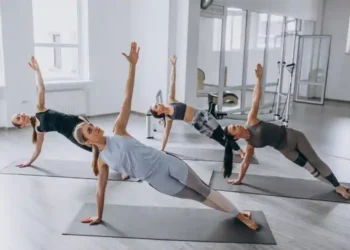

I’ll admit it: when I first started thinking about adding morning stretches to my routine, I imagined I’d need a yoga mat, half an hour of spare time, and considerably more enthusiasm than I usually have before my first cup of coffee.
Thankfully, none of that is necessary.
A simple 10-minute morning stretches routine can be enough to loosen up a stiff body, get you moving, and make that transition from “I’ve just crawled out of bed” to “OK, I’m ready for the day” feel a whole lot easier.
And when you spend a lot of your day sitting at a desk, driving, looking at a phone, gardening, working around the house, or simply not moving quite as much as you’d like, those few minutes of gentle movement can feel wonderful.
The best part? You don’t need to be flexible. You don’t need to touch your toes. And you definitely don’t need to twist yourself into complicated yoga poses.
View more Health and Wellness Tips >
Here’s my simple 10-minute morning stretches routine and why I think it’s such a lovely way to start the day.
Why Stretch in the Morning?
Have you ever got out of bed and felt as though your body somehow aged 20 years overnight?
Your back feels stiff. Your shoulders are tight. Your hamstrings seem to have mysteriously shortened while you were sleeping.
It makes sense when you think about it. We’ve just spent several hours relatively still, so getting up and immediately expecting our bodies to spring into action can feel a little abrupt.
Gentle stretching and movement can help us gradually get moving again.
Stretching may help improve flexibility and range of motion, while regular flexibility exercises can help us maintain mobility as we get older. Adding some gentle movement also gives me a few minutes to wake up mentally before the day’s emails, jobs, errands and general chaos begin.
I don’t think of my morning stretches routine as a workout.
I think of it as a daily reset button.
The 10-Minute Morning Stretches Routine
You don’t need any special equipment for this routine. Comfortable clothes are helpful, but honestly, I’ve done stretches like these while still wearing my pyjamas.
Move gently and never force a stretch. You should feel mild tension, not sharp pain.
If you’re particularly stiff first thing in the morning, start with a little movement rather than immediately holding a deep stretch.
Minute 1: Reach Up and Wake Up
Let’s start ridiculously simply.
Stand with your feet around hip-width apart.
Slowly lift both arms overhead and reach towards the ceiling.
Don’t strain. Just imagine you’re trying to make yourself slightly taller.
Take a slow breath in as you reach upwards, then breathe out as you lower your arms.
Repeat several times.
You can also gently lean to one side and then the other to stretch through the sides of your torso.
After spending hours curled up in bed, this feels surprisingly good.
Try this for: 60 seconds.
Minute 2: Shoulder Rolls and Neck Release
If you’re anything like me, your shoulders seem to have a habit of creeping towards your ears whenever life gets busy.
Morning is a perfect opportunity to remind them where they’re supposed to live.
Roll your shoulders slowly backwards several times, making large comfortable circles.
Then reverse the movement.
Next, gently tilt your head towards your right shoulder. Hold briefly before returning to the centre and repeating on your left.
You can also slowly look left and right.
Avoid making fast or forceful circles with your neck.
Try this for: 60 seconds.
Minute 3: Standing Side Stretch
Raise your right arm overhead and gently lean towards your left.
You should feel the stretch running along the right side of your body.
Hold for around 15–20 seconds and then change sides.
I particularly like this stretch in the morning because it feels as though I’m opening up my whole upper body rather than concentrating on one tiny muscle.
Keep your chest facing forwards rather than twisting towards the floor.
And remember: we’re waking up, not auditioning for gymnastics.
Try this for: 60 seconds.
Minute 4: Gentle Standing Backbend
Place your hands on your hips or the back of your pelvis.
Stand tall and gently lift your chest upwards.
Allow yourself to lean backwards slightly while keeping the movement controlled and comfortable.
You don’t need to go far.
In fact, a tiny movement may be plenty.
Hold briefly, return to neutral and repeat a few times.
This can feel especially satisfying if you spend a lot of your day hunched over a laptop or phone.
Try this for: 60 seconds.
Minute 5: Standing Forward Fold
Now let’s give the backs of the legs some attention.
Stand with your knees slightly bent and slowly hinge forwards from your hips.
Let your upper body relax down.
Don’t worry about touching the floor.
Seriously.
Touching your toes isn’t the goal.
You can place your hands on your thighs, shins, a chair or wherever feels comfortable.
Keep your knees softly bent, particularly first thing in the morning.
Take a few relaxed breaths before slowly coming back up.
Try this for: 60 seconds.
Minute 6: Hip Flexor Stretch
Our hip flexors can become tight when we spend long periods sitting, so I like giving them a little attention every morning.
Step your right foot forwards and your left foot backwards into a short split stance.
Bend your front knee slightly while keeping your torso upright.
Gently tuck your pelvis underneath you and shift forwards until you feel a mild stretch at the front of your left hip.
Hold for around 20–30 seconds.
Switch sides.
If balance is tricky, hold onto a chair or countertop. There’s absolutely no prize for wobbling dramatically around the bedroom.
Try this for: 60 seconds.
Minute 7: Calf Stretch
Here’s another wonderfully simple stretch that often gets overlooked.
Place your hands against a wall.
Step one foot backwards and press the heel gently towards the floor.
Keep the back leg relatively straight and bend your front knee.
You should feel a comfortable stretch through your calf.
Hold for around 20–30 seconds and switch legs.
This one can be particularly useful before a day involving plenty of walking.
Try this for: 60 seconds.
Minute 8: Figure-Four Hip Stretch
Hold onto a sturdy chair, countertop or wall.
Shift your weight onto your left leg.
Place your right ankle across your left thigh, creating a figure-four shape.
Slowly bend your standing leg and sit your hips backwards slightly.
You should begin to feel the stretch around your right hip and glute.
Hold gently before changing sides.
If this position isn’t comfortable or balance is difficult, you can perform a similar stretch while sitting securely in a chair.
Try this for: 60 seconds.
Minute 9: Chest Opener
This might be one of my favourite stretches for anyone who spends hours at a computer.
Stand tall and gently bring your hands behind your back.
If comfortable, loosely clasp them together.
Move your hands slightly away from your body while gently lifting your chest.
Keep your shoulders relaxed.
Don’t yank your arms backwards.
The movement can be very small and still feel effective.
Hold, release and repeat.
Afterwards, roll your shoulders backwards a few times.
Try this for: 60 seconds.
Minute 10: Full-Body Stretch and Deep Breathing
We’re finishing exactly where we started — standing tall.
Plant your feet comfortably on the floor.
Inhale slowly as you sweep your arms out and upwards.
Reach towards the ceiling.
Exhale as you bring your arms back down.
Repeat several times.
For the final 20–30 seconds, simply stand comfortably and breathe.
That’s it.
No burpees.
No sweating.
No complicated poses.
Just 10 minutes of movement.
Your 10-Minute Morning Stretches Routine at a Glance
Here’s the whole routine:
Full-body reach — 1 minute
Shoulder rolls and neck stretch — 1 minute
Standing side stretch — 1 minute
Gentle standing backbend — 1 minute
Forward fold — 1 minute
Hip flexor stretch — 1 minute
Calf stretch — 1 minute
Figure-four hip stretch — 1 minute
Chest opener — 1 minute
Full-body stretch and breathing — 1 minute
That’s your entire morning routine.

What Can Happen When You Stretch Every Morning?
I wouldn’t promise that 10 minutes of stretching will magically transform your health.
But that’s not really the point.
The beauty of a short morning stretching routine is how achievable it is.
Ten minutes doesn’t feel like a huge commitment.
And doing something consistently is usually far more realistic than designing an elaborate 45-minute morning routine that lasts approximately three days before disappearing completely.
With regular stretching, you may notice that everyday movements start to feel easier and that your flexibility or range of motion gradually improves.
You may also simply enjoy feeling less stiff when you start moving around in the morning.
There’s another benefit I think is easy to overlook: you’ve started the day by doing something positive for yourself.
Before checking emails.
Before opening social media.
Before worrying about your to-do list.
You’ve taken 10 minutes to move and pay attention to how your body feels.
That’s a pretty good start.
What If You’re Really Stiff?
Then this routine might take a little patience.
Flexibility isn’t something you need before you start stretching. It’s something that can develop gradually.
Modify anything that feels uncomfortable.
Use a chair.
Bend your knees.
Reduce the range of movement.
Hold stretches for less time.
And forget about what the movement is “supposed” to look like.
Your stretch doesn’t need to look like somebody else’s.
Your goal is simply to move comfortably through a range that feels appropriate for your body.
Should You Stretch Before or After Breakfast?
There’s no universal rule saying you need to stretch before breakfast.
Personally, I like the simplicity of:
Wake up → drink some water → stretch → breakfast.
It means I’ve done it before the day gets going.
But if you’re extremely stiff when you first wake up, you might prefer walking around the house for a few minutes, having a shower or eating breakfast first.
The best time is ultimately the time when you’re most likely to actually do it.
Should Morning Stretches Hurt?
No.
There’s an important difference between the mild pulling sensation of a stretch and pain.
A stretch might feel slightly uncomfortable because you’re gently lengthening tissues and moving towards the edge of your comfortable range.
But sharp, stabbing, burning or sudden pain is a reason to stop.
Never bounce aggressively into stretches or force your body deeper because you think you “should” be more flexible.
Gentle and consistent wins here.
How Long Before You Become More Flexible?
This is one of those frustrating questions where the answer is: it depends.
Your starting flexibility, age, activity level, consistency and the particular muscles you’re working can all influence progress.
You might notice some movements becoming more comfortable relatively quickly, while meaningful improvements in flexibility generally require regular practice over time.
That’s another reason I like the 10-minute approach.
Rather than obsessing about how quickly I can become flexible, I can concentrate on creating the habit.
Ten minutes today.
Ten minutes tomorrow.
Ten minutes the day after that.
Those small sessions add up.
How to Actually Make Morning Stretching a Habit
This might be the most important part of the entire routine.
Don’t rely on motivation.
Make stretching incredibly easy to start.
You could leave your exercise mat beside your bed, although you don’t actually need one for this routine.
You could stretch while the coffee is brewing.
You could attach stretching to something you already do every morning.
For example:
After I brush my teeth, I stretch for 10 minutes.
This kind of habit stacking gives the new habit an obvious trigger.
I’d also resist the temptation to make the routine longer straight away.
If 10 minutes feels manageable, keep it at 10 minutes.
You can always do more when you genuinely want to.
Can You Do This Routine Every Day?
For many generally healthy adults, gentle flexibility and mobility exercises can be incorporated regularly, provided they’re comfortable and appropriate for the individual.
But more isn’t automatically better.
Your stretches should remain controlled and gentle.
And your body doesn’t feel exactly the same every morning.
Some days I might comfortably reach a little further.
Other days everything feels tight.
That’s fine.
Treat the routine as a daily check-in rather than a flexibility test.
If you have an injury, significant joint or back problems, balance difficulties, osteoporosis, have recently had surgery, or have a medical condition affecting movement, it’s sensible to ask an appropriate healthcare professional which exercises are suitable for you.
FAQs About Morning Stretches
1. Is 10 minutes of stretching in the morning enough?
Ten minutes can absolutely be worthwhile, especially if the alternative is doing nothing. A short routine allows you to move several major areas of the body and, importantly, is manageable enough to repeat regularly.
2. Is it OK to stretch immediately after waking up?
Gentle movement can be fine for many people, but don’t force yourself straight into deep stretches when your body still feels stiff. Start with easy movements such as reaching, shoulder rolls and walking around before progressing into longer holds.
3. Should I stretch every morning?
You can incorporate gentle stretching into your regular routine if it feels comfortable. Listen to your body and modify or skip anything that causes pain.
4. Does stretching count as exercise?
Stretching is a form of physical activity and can help with flexibility and range of motion, but it doesn’t replace aerobic activity or strength training. Ideally, think of stretching as one part of a broader movement routine.
5. Can morning stretching help with posture?
Stretching alone isn’t a magic fix for posture, but maintaining mobility in areas such as the chest, shoulders and hips may help support comfortable movement. Strength, workstation setup and your everyday movement habits matter too.
6. Can I do these stretches in bed?
Some stretches can be adapted for bed, but standing gives you more options. If getting straight onto the floor first thing doesn’t appeal, this routine deliberately keeps things simple and mostly upright.
7. What should I do if one stretch hurts?
Stop doing it. Try reducing the range of movement or replacing it with a gentler variation. Persistent or unexplained pain deserves professional medical or physiotherapy advice rather than simply trying to stretch through it.
My Final Thoughts
I’ve become increasingly convinced that a good morning routine doesn’t have to be complicated.
We don’t necessarily need to wake up at 5 a.m., meditate for an hour, drink something green and mysterious, write three pages in a journal and complete a full workout before breakfast.
Sometimes 10 minutes is enough.
Ten minutes to stretch.
Ten minutes to breathe.
Ten minutes to move your shoulders, hips, back and legs after spending the night relatively still.
Will one 10-minute stretching session change everything?
Probably not.
But making those 10 minutes part of your morning, day after day, can change something much more important: your routine.
And that’s where the real difference happens.
Tomorrow morning, instead of immediately reaching for your phone, try standing up and giving yourself 10 minutes.
Your body might be very glad you did.
Resources
1. Mayo Clinic — Stretching: Focus on Flexibility. Supports the article’s statements that regular stretching can improve flexibility and joint range of motion, and that even 5–10 minutes at a time can be helpful. It also advises stretching smoothly without bouncing and stopping if stretching causes pain.
Mayo Clinic stretching guide
2. Mayo Clinic — A Guide to Basic Stretches. Supports stretching major muscle groups, including the calves, thighs and hips, and recommends gentle, slow stretching. Mayo says stretching can increase flexibility and improve joint range of motion.
Mayo Clinic basic stretches guide
3. American Heart Association — Flexibility Exercise (Stretching). Supports the article’s discussion of stretching for flexibility and easier everyday movement. The AHA recommends slow, smooth movements, normal breathing and avoiding painful stretching.
American Heart Association stretching guidance
4. American Heart Association — Stretching and Flexibility Exercises. This is particularly useful for sourcing individual exercises. It includes torso, hamstring and calf stretches and gives instructions for performing them safely.
American Heart Association flexibility exercises
5. U.S. Department of Health and Human Services — Physical Activity Guidelines for Americans. This is probably the strongest government source to cite. The guidelines state that stretching exercises are effective at increasing flexibility and can make activities requiring flexibility easier. Importantly, they also clarify that flexibility exercises don’t replace recommended aerobic or muscle-strengthening activity.
Physical Activity Guidelines for Americans