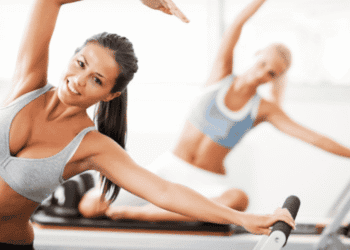

If you’re trying to lose weight but the thought of another punishing workout makes you want to stay firmly planted on the sofa, yoga poses for weight loss can be a much gentler way to get moving.
Don’t let the calm breathing and yoga mats fool you, though. Some yoga poses are surprisingly hard work. Hold Chair Pose for 30 seconds or move slowly through a few rounds of Plank and Chaturanga and you’ll soon feel exactly which muscles are working!
I like yoga because it does more than simply help you burn energy. It can strengthen your legs, arms and core, improve flexibility and balance, and help you become more aware of your body.
That said, yoga isn’t a magic trick for weight loss. You can’t perform one particular pose and suddenly burn belly fat. Weight loss comes from the bigger picture: your diet, overall activity levels, sleep, stress and exercise habits.
But yoga can certainly be part of that picture.
View more Health and Wellness Ideas >
Here are some of my favorite yoga poses for weight loss to incorporate into your routine, including beginner-friendly instructions and ways to make them easier or more challenging.
1. Chair Pose
Chair Pose looks easy.
Then you try holding it.
Within a few seconds your thighs may start asking you exactly what you’ve got against them!
Chair Pose is fantastic for working some of the biggest muscles in your body, particularly your thighs and glutes.
How to do Chair Pose
Stand with your feet together or approximately hip-width apart.
Bend your knees.
Push your hips backwards as though you’re sitting into an imaginary chair.
Keep your chest lifted.
Raise your arms above your head if that feels comfortable.
Keep your weight towards your heels.
Hold for around 20–30 seconds.
What does it work?
Chair Pose targets your:
Thighs
Glutes
Hamstrings
Core
Back
Shoulders
Beginner tip
Don’t worry about squatting particularly low.
Start with a shallow bend in your knees and gradually increase the depth as you become stronger.
2. Warrior II
Warrior II is one of those poses that instantly makes me feel as though I’m actually doing something.
Your legs are working, your arms are extended, your core is switched on and you’re concentrating on holding everything in position.
How to do Warrior II
Stand with your feet wide apart.
Turn your right foot out approximately 90 degrees.
Turn your left foot slightly inward.
Bend your right knee.
Keep your right knee roughly above your ankle.
Extend both arms horizontally.
Look over the fingertips of your right hand.
Hold for 20–30 seconds.
Repeat on the opposite side.
Why I like it
Warrior II works several areas at the same time, including your:
Thighs
Hips
Glutes
Shoulders
Core
If you want to make it more challenging, try holding the position for 45–60 seconds.
3. Warrior III
Warrior III takes things up another level because it adds balance.
You’ll be standing on one leg while extending the other behind you, so your core has to work hard to keep you stable.
And yes, wobbling is completely normal.
How to do Warrior III
Stand upright with your feet together.
Shift your weight onto your right foot.
Slowly hinge forward from your hips.
Lift your left leg behind you.
Try to bring your torso and lifted leg towards a horizontal position.
Stretch your arms forward or keep them on your hips.
Hold briefly.
Return to standing.
Switch legs.
Beginner modification
Keep your fingertips on a wall, chair or countertop while you learn the movement.
There’s absolutely no prize for falling over because you refused to use support!
4. Plank Pose
Plank is one of the best simple exercises for working a large portion of your body.
It appears regularly in yoga sequences, particularly Vinyasa and power yoga.
How to do Plank Pose
Begin on your hands and knees.
Place your hands directly beneath your shoulders.
Step your feet backwards.
Keep your body in a straight line from your head to your heels.
Tighten your abdominal muscles.
Avoid allowing your hips to sag.
Hold for 20–30 seconds.
Muscles worked
Plank works your:
Abdominals
Arms
Shoulders
Chest
Back
Glutes
Make it easier
Lower your knees to the floor.
Make it harder
Gradually increase your hold to 45 or 60 seconds.
5. Chaturanga
If Plank is feeling a little too comfortable, meet Chaturanga.
This pose is sometimes described as the yoga version of a push-up.
It can be tough, particularly when you’re first learning it.
How to do Chaturanga
Start in Plank Pose.
Slowly bend your elbows while keeping them tucked close to your sides.
Lower your body towards the floor while keeping your torso relatively straight.
Stop before your chest touches the floor.
Then transition into your next pose or gently lower yourself down.
Important beginner tip
Chaturanga requires plenty of upper-body strength.
If you’re new to yoga, put your knees on the floor while lowering yourself.
Good technique is much more important than trying to perform an advanced version too soon.
6. Downward-Facing Dog
Downward-Facing Dog might look like a stretching pose, but your shoulders, arms and core are all doing plenty of work.
It’s also a great transition pose between more demanding movements.
How to do Downward-Facing Dog
Begin on your hands and knees.
Tuck your toes underneath.
Lift your knees from the floor.
Push your hips upwards and backwards.
Aim for an upside-down V shape.
Press your hands firmly into the floor.
Let your head relax between your arms.
Hold for several slow breaths.
Tight hamstrings?
Bend your knees.
There’s no need to force your heels towards the floor.
Comfortable, controlled movement is much more important.
7. Boat Pose
Boat Pose is one of my favorite yoga poses for strengthening the core.
It doesn’t involve much movement, but you’ll probably feel your stomach muscles working very quickly.
How to do Boat Pose
Sit on your mat with your knees bent.
Lean your torso slightly backwards.
Keep your spine long.
Lift your feet from the floor.
Extend your arms forwards.
Keep your knees bent if you’re a beginner.
If you’re comfortable, gradually straighten your legs.
Hold for 15–30 seconds.
Why it’s useful
A stronger core can improve your posture, stability and performance during many other forms of exercise.
8. Bridge Pose
Bridge Pose is another wonderfully simple exercise that works your lower body.
I particularly like it because it can easily be adapted to your fitness level.
How to do Bridge Pose
Lie on your back.
Bend your knees.
Place your feet flat on the floor approximately hip-width apart.
Keep your arms alongside your body.
Press through your feet.
Slowly lift your hips.
Gently squeeze your glutes.
Hold for several breaths.
Slowly lower your hips.
You can either hold Bridge Pose or perform repeated controlled lifts.
9. Crescent Lunge
If you want to get those leg muscles working, try Crescent Lunge.
It combines balance, strength and flexibility in one movement.
How to do it
Stand upright.
Step one foot backwards.
Keep your back heel lifted.
Bend your front knee.
Keep your torso upright.
Raise your arms overhead.
Hold for around 20–30 seconds.
Change sides.
You should feel your thighs and glutes doing plenty of the work.
10. Side Plank
Regular Plank isn’t challenging enough?
Turn sideways!
Side Plank works your shoulders and core while requiring plenty of balance.
How to do Side Plank
Start in Plank Pose.
Shift your weight onto one hand.
Rotate your body sideways.
Stack your feet or place one foot slightly in front of the other.
Lift your upper arm towards the ceiling.
Try to keep your hips raised.
Hold for 15–30 seconds and switch sides.
Beginner version
Place your lower knee on the floor for support.
11. Goddess Pose
Goddess Pose is essentially yoga’s answer to a wide squat.
And yes, your thighs will probably notice.
How to do Goddess Pose
Stand with your feet wider than shoulder-width apart.
Turn your toes slightly outwards.
Bend your knees.
Lower your hips.
Keep your torso upright.
Extend your arms or bend them into a cactus shape.
Hold for 20–30 seconds.
Goddess Pose works your:
Glutes
Inner thighs
Quadriceps
Hips
Core
12. Sun Salutations
Individual poses are useful, but if your goal is to make yoga more energetic, one of the best things you can do is link poses together.
Sun Salutations are perfect for this.
A basic sequence might look something like this:
Mountain Pose → Forward Fold → Half Lift → Plank → Chaturanga → Upward-Facing Dog → Downward-Facing Dog → Forward Fold → Mountain Pose
Once you’re familiar with the movements, you can repeat the sequence several times.
Because you’re continuously moving, it can feel much more like a traditional workout than simply holding individual poses.

Which Type of Yoga Is Best for Weight Loss?
This is important because not all yoga sessions are equally energetic.
A relaxing restorative yoga class is very different from a fast-paced Vinyasa session.
If weight management is one of your goals, these are some styles worth exploring.
Vinyasa Yoga
Vinyasa links poses together in flowing sequences.
You continually move while coordinating your movements with your breathing, so sessions can become surprisingly energetic.
Power Yoga
Power yoga usually emphasizes strength and fitness.
Expect plenty of:
Planks
Lunges
Squats
Warrior poses
Balance exercises
Core movements
Ashtanga Yoga
Ashtanga uses established sequences of poses performed in a particular order.
It can be physically demanding, particularly as your practice progresses.
Hot Yoga
Hot yoga takes place in a heated room.
One thing worth remembering is that sweating more doesn’t mean you’re automatically burning more fat.
You also need to be particularly careful about staying hydrated and avoiding overheating.
My Simple 15-Minute Yoga Routine
If you’re short on time, you don’t need to spend an hour on your yoga mat.
Try this simple routine.
Warm-up
Downward-Facing Dog — 30 seconds
↓
Crescent Lunge — 30 seconds each leg
↓
Warrior II — 30 seconds each side
↓
Chair Pose — 30 seconds
↓
Plank — 20–30 seconds
↓
Boat Pose — 20 seconds
↓
Bridge Pose — 30 seconds
↓
Side Plank — 15–20 seconds each side
↓
Downward-Facing Dog — 30 seconds
Rest briefly and repeat the sequence two or three times if you feel comfortable.
Can Yoga Really Help You Lose Weight?
Potentially, yes—but I wouldn’t rely on yoga alone.
Your weight is influenced by a combination of factors including:
Food intake
Physical activity
Muscle mass
Sleep
Stress
Hormones
Genetics
Medical conditions
Medications
Yoga can help increase your overall activity and some styles can provide quite a demanding workout.
But there may be an additional benefit.
Yoga places a lot of emphasis on mindfulness and paying attention to your body. For some people, that can make it easier to notice hunger cues, stress eating and habitual snacking.
So while yoga isn’t a miracle weight-loss solution, it can fit very nicely into an overall healthy lifestyle.
Can Yoga Reduce Belly Fat?
Unfortunately, no exercise can tell your body exactly where to lose fat.
You can strengthen your abdominal muscles with Planks, Boat Pose and other core exercises, but that doesn’t mean your body will specifically burn the fat sitting directly above those muscles.
This is called spot reduction, and it isn’t really how fat loss works.
As your overall body fat decreases, you may gradually notice changes around your stomach as well as other parts of your body.
Meanwhile, strengthening your core can still improve your posture and stability—which is well worth doing whether the bathroom scales change or not.
How Often Should You Practice Yoga?
If you’re completely new to yoga, I’d start with two or three sessions each week.
Even 15–30 minutes is enough to begin building the habit.
As your fitness improves, you might gradually increase the length or frequency of your sessions.
I particularly like combining yoga with other activities.
For example:
Monday: Yoga
Tuesday: Walking
Wednesday: Strength training
Thursday: Yoga
Friday: Walking
Saturday: Yoga or another activity you enjoy
Sunday: Rest or gentle stretching
There’s no perfect schedule.
The goal is to find something you can realistically keep doing.
Yoga for Weight Loss: Pros and Cons
Pros
Suitable for many fitness levels
Can be done at home
Requires very little equipment
Builds strength
Improves flexibility
Improves balance
Can support mobility
May help with stress management
Easy to combine with walking or other workouts
Many poses can be modified for beginners
Cons
Some styles of yoga aren’t particularly energetic
Yoga alone may not create enough activity for significant weight loss
More advanced poses can cause injuries if they’re performed incorrectly
Results usually require consistency
Weight loss still depends heavily on your overall diet and lifestyle
Tips for Getting More From Your Yoga Routine
Keep moving
Rather than holding one pose for several minutes, try moving smoothly between poses if you’re looking for a more energetic session.
Use your largest muscles
Poses involving your thighs, glutes and back can make a session feel considerably more demanding.
Think:
Chair Pose
Lunges
Warrior poses
Goddess Pose
Add strength-based poses
Plank, Side Plank, Boat Pose and Chaturanga are excellent additions.
Walk as well
Never underestimate walking.
Yoga and regular walking are a wonderfully simple combination if you’re trying to become more active.
Don’t make every session difficult
Some days you may want an energetic yoga flow.
Other days your body may benefit more from gentle stretching and relaxation.
Both are useful.
Progress gradually
You don’t need to jump immediately into advanced poses.
Increase your hold times and difficulty slowly as your balance and strength improve.
FAQs About Yoga and Weight Loss
1. Is 20 minutes of yoga a day enough?
Twenty minutes can absolutely be worthwhile.
A short routine you consistently complete is far better than an ambitious 90-minute workout that you abandon after three days.
2. Which yoga pose burns the most fat?
There isn’t one magical fat-burning yoga pose.
Sequences involving several large muscle groups are generally more demanding than isolated stretching poses.
Chair Pose, Warrior poses, Plank, lunges and Sun Salutations are all useful options.
3. Can beginners lose weight with yoga?
Yoga can contribute to a beginner’s overall activity levels, particularly when combined with walking and healthy eating habits.
Start slowly and choose beginner-friendly modifications.
4. Is yoga better than walking?
You don’t have to choose.
Walking provides accessible cardiovascular activity, while yoga can improve strength, mobility, flexibility and balance.
Together they make an excellent combination.
5. Should I do yoga every day?
Gentle yoga can often be practiced frequently, but challenging sessions still require recovery.
Listen to your body.
Pain isn’t something you should push through.
6. How quickly will yoga change my body?
Everyone responds differently.
You may notice improvements in flexibility, balance or strength before you see obvious physical changes.
Try to focus on how you feel and what your body can do rather than relying entirely on the scales.
Final Thoughts
Yoga probably isn’t going to melt away pounds overnight—and that’s actually a good reason to ignore any claims promising that it will.
What yoga can do is help you move more, become stronger, improve your flexibility and create an exercise routine you genuinely enjoy.
And enjoyment matters.
The workout you willingly return to several times a week is usually far more valuable than the supposedly “perfect” workout you hate doing.
If weight loss is your goal, try incorporating more demanding poses such as Chair Pose, Warrior II, Warrior III, Plank, Side Plank, Boat Pose and Crescent Lunge into a flowing routine.
Add some regular walking or other cardiovascular exercise, include strength training where possible, and give yourself time.
You don’t need to become a human pretzel.
You just need to keep moving.
Resources
National Center for Complementary and Integrative Health (NCCIH) – Yoga for Health
A useful NIH-backed source covering the researched health benefits of yoga, including balance, strength, stress management, sleep, and general wellbeing.
https://www.nccih.nih.gov/health/yoga-what-you-need-to-know
Centers for Disease Control and Prevention (CDC) – Physical Activity and Your Weight and Health
Useful for supporting the section explaining that physical activity contributes to calorie expenditure and that weight loss depends on the overall balance between calories consumed and calories used.
https://www.cdc.gov/healthy-weight-growth/physical-activity/index.html
U.S. Department of Health and Human Services – Physical Activity Guidelines for Americans
An authoritative source for recommendations on aerobic and muscle-strengthening exercise. Current guidance recommends 150–300 minutes of moderate aerobic activity per week plus muscle-strengthening activity on at least two days for adults.
https://odphp.health.gov/our-work/nutrition-physical-activity/physical-activity-guidelines