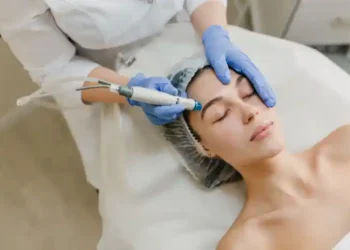
Freckles can be one of those skin features you either love, dislike, or feel completely differently about depending on the day. Personally, I think freckles can look beautiful, but I also understand why some people want to fade them—particularly when pigmentation becomes more noticeable after years of sun exposure.
The good news is that there are now several ways to lighten freckles and other small areas of pigmentation. Some are relatively gentle, while others involve professional laser or light treatments that can produce much faster results.
However, before deciding on a freckle removal procedure, there is one important thing to know: not every brown spot is actually a freckle.
View: Cosmetic Procedures: Our Complete Guide
True freckles, medically known as ephelides, are often genetic and tend to become darker after sun exposure. Other flat brown patches may actually be solar lentigines, commonly called sun spots or age spots.
Cleveland Clinic notes that freckles themselves are generally harmless, although any spot that changes in appearance should be assessed by a healthcare professional.
Here I’ll look at the main freckle removal procedures available, how they work, their advantages and disadvantages, and what you should consider before having treatment.
Can Freckles Actually Be Removed?
It is more realistic to talk about fading or reducing freckles rather than guaranteeing their permanent removal.
Freckles are strongly influenced by genetics and ultraviolet exposure. Even if pigmentation is successfully removed with treatment, new freckles can develop and previously treated pigmentation may gradually become noticeable again.
This is why sun protection is such an important part of any pigmentation treatment plan.
Cleveland Clinic recommends using a broad-spectrum, water-resistant sunscreen of at least SPF 30, together with sensible sun avoidance and protective clothing.

With that in mind, let’s look at your main options.
1. Laser Freckle Removal
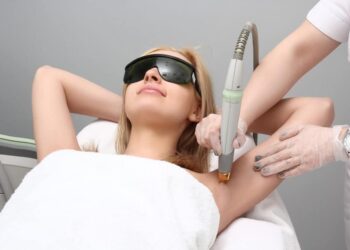
Laser treatment is probably one of the first procedures people think of when they want to remove freckles.
Different types of lasers can target pigment within the skin. The light energy is absorbed by melanin—the pigment responsible for the brown coloring—and breaks down the unwanted pigmentation.
Over time, the body’s natural processes clear away some of this pigment.
Cleveland Clinic explains that laser resurfacing can improve pigmentation including freckles and sun spots, although different laser technologies vary significantly in strength, downtime and suitability.
Some practitioners use pigment-targeting lasers, while others use fractional lasers when pigmentation is combined with concerns such as uneven texture, fine lines or sun damage.
Advantages of laser treatment
Results can be relatively quick.
Individual areas of pigmentation can be targeted.
Treatment may produce a noticeable reduction in darker freckles and sun spots.
Some lasers can simultaneously improve skin texture and other signs of sun damage.
Disadvantages
Several treatments may be necessary.
Temporary redness, swelling or crusting can occur.
Pigmentation can sometimes become temporarily darker before fading.
There is a risk of post-inflammatory hyperpigmentation or hypopigmentation.
Treatment can be relatively expensive.
The type of laser matters enormously. A treatment that works beautifully for one skin tone may not be the safest choice for another.
For this reason, laser freckle removal is something I would only consider after a proper consultation with a qualified dermatologist or experienced medical laser practitioner.
2. IPL for Freckles
IPL stands for intense pulsed light.
Although people often call IPL a laser treatment, technically it isn’t a laser. Instead, the machine produces multiple wavelengths of light that can target pigmentation and redness.
IPL is frequently offered for:
Freckles
Sun spots
Uneven pigmentation
Facial redness
Signs of sun damage
The American Society for Dermatologic Surgery describes IPL as a non-ablative treatment, meaning it treats the skin without removing its surface. Recovery is therefore generally relatively limited compared with more aggressive resurfacing procedures.
Pigmented areas may temporarily become darker after IPL before gradually flaking or fading.
Advantages
IPL can be particularly attractive if you have lots of scattered freckles or general sun damage rather than one or two individual marks.
Benefits can include:
Minimal downtime for many patients.
Large areas can be treated relatively quickly.
It can address both pigmentation and redness.
It may improve the overall appearance of sun-damaged skin.
Disadvantages
IPL isn’t appropriate for everyone.
Possible adverse effects include discoloration, swelling, crusting, pain, infection and scarring.
There may also be limitations depending on your skin tone, recent tanning and the particular type of pigmentation you have.
A professional assessment before IPL treatment is therefore very important.
3. Chemical Peels for Freckles
Chemical peels are another established treatment for freckles and uneven pigmentation.
During a chemical peel, a carefully selected acid solution is applied to the skin. This produces controlled exfoliation and encourages damaged surface cells to be replaced.
Peels range from extremely superficial treatments to much deeper medical procedures.
Common ingredients include:
Glycolic acid
Lactic acid
Salicylic acid
Trichloroacetic acid (TCA)
Phenol
According to Cleveland Clinic, chemical peels can improve freckles, sun spots, age spots and uneven skin coloring.
The American Society for Dermatologic Surgery similarly lists freckles and moderate skin discoloration among the concerns that may be improved with medium-depth chemical peels.
Light chemical peels
Light or superficial peels remove cells from the outermost layers of the skin.
They usually involve relatively little downtime but generally produce gradual results.
Several treatments may be necessary.
Medium chemical peels
Medium peels penetrate more deeply and can produce more obvious changes in pigmentation.
They also involve considerably more recovery.
Deep chemical peels
Deep peels are significant medical procedures rather than simple beauty treatments.
They can produce dramatic changes but have much greater risks and recovery requirements. They are certainly not something I would choose simply because I had a handful of ordinary freckles.
Advantages of chemical peels
Can improve several skin concerns simultaneously.
May brighten dull or sun-damaged skin.
Can improve uneven pigmentation.
Different peel strengths allow treatment to be customized.
Disadvantages
Results are usually less targeted than laser treatment.
Several superficial peels may be needed.
Deeper peels can involve significant downtime.
Pigmentation changes and scarring are possible.
Incorrectly performed peels can cause chemical burns.
Professional supervision becomes increasingly important as peel strength increases.
4. Cryotherapy
Cryotherapy involves applying extremely cold liquid nitrogen to a pigmented lesion.
The treated skin is frozen, damaging the pigment-containing cells. The area then heals and the pigmentation may become lighter.
Cryotherapy is commonly associated with the treatment of certain age spots rather than widespread genetic freckles.
The American Academy of Dermatology explains that cryosurgery is commonly used for age spots. Temporary pain, blistering, redness and swelling can occur, while less common permanent complications can include lighter or darker pigmentation or scarring.
Advantages
Treatment itself is very quick.
Useful for treating individual isolated spots.
Doesn’t require a lengthy procedure.
Disadvantages
Not practical for hundreds of tiny freckles.
Blistering or crusting can occur.
There is a risk of skin color changes.
It may leave a lighter patch where the pigmentation was treated.
Cryotherapy makes much more sense for carefully selected individual lesions than for widespread facial freckling.
5. Microdermabrasion
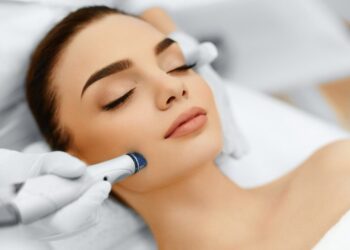
Microdermabrasion mechanically exfoliates the outermost layers of the skin using a specialized device.
It is considerably gentler than traditional dermabrasion.
Microdermabrasion isn’t usually my first choice if someone’s sole objective is removing noticeable freckles. However, it can help improve mild superficial pigmentation and generally sun-damaged skin.
The American Academy of Dermatology notes that microdermabrasion can help reduce age spots and that research has shown benefits when it is combined with chemical peeling.
Advantages
Very little downtime.
Can make the complexion look smoother and brighter.
Useful when pigmentation is accompanied by rough or dull skin.
Disadvantages
Results are subtle.
Multiple treatments are usually required.
Deep pigmentation won’t disappear simply through surface exfoliation.
Think of microdermabrasion as more of a skin-refreshing treatment that may improve mild pigmentation rather than a dramatic freckle-removal procedure.
6. Prescription and Topical Treatments
Procedures aren’t your only option.
Certain topical products can gradually reduce unwanted pigmentation.
These may include treatments containing ingredients such as:
Retinoids
Retinol
Alpha hydroxy acids
Vitamin C
Azelaic acid
Hydroquinone, when medically appropriate and prescribed/recommended
Cleveland Clinic lists retinoids, retinol and topical acids among possible approaches for fading freckles.
Creams are obviously much less invasive than lasers or peels, but there is a trade-off.
Results are slower.
The American Academy of Dermatology notes that creams and lotions generally need to be applied consistently for weeks or months, whereas procedures such as lasers tend to produce faster results.
For mild pigmentation, though, this may be exactly what you want.
Freckle Removal Options Compared
Treatment |
Best suited to |
Typical downtime |
Speed of improvement |
|---|---|---|---|
Laser |
Individual freckles, sun spots and pigmentation |
Low to moderate depending on laser |
Often relatively fast |
IPL |
Multiple freckles and widespread sun damage |
Usually low |
Gradual over several sessions |
Chemical peel |
Pigmentation plus texture or dullness |
Minimal to significant depending on depth |
Gradual to substantial |
Cryotherapy |
Individual isolated pigmented spots |
Usually short |
Relatively quick |
Microdermabrasion |
Mild superficial pigmentation |
Minimal |
Gradual |
Topical treatments |
Mild pigmentation or maintenance |
None |
Slow |
Remember that these are general comparisons. Your actual recovery and results depend on the procedure, treatment strength, skin type and practitioner.
Which Freckle Removal Procedure Works Best?
There isn’t one answer because the best treatment depends on what you’re actually trying to remove.
If you have a few clearly defined dark spots, targeted laser treatment may make sense.
If you have lots of freckles alongside general sun damage, IPL may be more practical.
If your skin is also dull, rough or unevenly pigmented, a chemical peel may offer broader benefits.
For very mild pigmentation, I’d personally start with good skincare, sun protection and topical treatments before considering anything aggressive.
Most importantly, have the pigmentation correctly diagnosed first.
Freckle Removal and Darker Skin Tones
This deserves special attention.
Procedures that deliberately target melanin can sometimes trigger unwanted pigment changes.
After inflammation or injury, skin may produce extra pigmentation, leading to post-inflammatory hyperpigmentation. Conversely, treatment can occasionally remove too much pigmentation and leave lighter areas.
The ASDS notes that post-inflammatory hyperpigmentation is a potential complication following treatment of freckles and lentigines with pigment-targeting lasers and light devices.
That doesn’t automatically mean you can’t have treatment if you have a darker skin tone. It means the technology, settings and experience of the practitioner become especially important.
Ask specifically how frequently the practitioner treats patients with your skin type.
What About DIY Freckle Removal?
I’d be very cautious here.
The internet is full of alleged freckle remedies involving ingredients such as:
Lemon juice
Apple cider vinegar
Hydrogen peroxide
Baking soda
Undiluted acids
Homemade chemical peels
A treatment being “natural” doesn’t make it safe.
Acidic substances can irritate or burn the skin, and inflammation itself can produce more pigmentation.
Professional treatments work because their concentration, exposure time and application are controlled.
Trying to recreate a medical-strength peel at home is a completely different proposition.
Before Having Any Freckle Removal Procedure
There is one step I wouldn’t skip: make sure the spot really is a freckle or benign sun spot before removing it.
You don’t want to cosmetically destroy a skin lesion that should have been medically examined.
Cleveland Clinic recommends seeking medical advice if a freckle or other skin spot:
Changes in size, shape or color.
Develops an irregular border.
Becomes asymmetrical.
Itches, hurts or bleeds.
Becomes raised.
Contains several colors or unusually dark areas.
If anything about a mark looks unusual, get it checked before booking a cosmetic treatment.
Sun Protection After Freckle Removal
You can spend a considerable amount of money removing pigmentation only for UV exposure to encourage it to return.
Daily sun protection is therefore not an optional extra.
Use a broad-spectrum SPF 30 or higher, and don’t forget that sunscreen needs to be reapplied when you’re outside for prolonged periods.
Hats, sunglasses, shade and protective clothing all help too.
The American Academy of Dermatology emphasizes that sun protection remains essential after treating pigmentation because age spots and other sun-related pigmentation can return.
My Verdict: Is Freckle Removal Worth It?
I wouldn’t feel pressured to remove freckles simply because flawless, completely uniform skin happens to be fashionable. Freckles are normal and, in the overwhelming majority of cases, harmless.
But if they genuinely bother you, there are good treatment options.
For noticeable pigmentation, laser and IPL treatments are among the options I’d investigate first with a dermatologist, particularly if you want faster results.
For someone wanting a gentler approach, topical pigmentation treatments or superficial chemical peels might be more appropriate.
The key thing is to avoid selecting a treatment simply because it sounds powerful.
The best freckle removal treatment isn’t necessarily the strongest treatment—it’s the one that is safest and most appropriate for your particular pigmentation and your skin type.
Frequently Asked Questions
1. Are freckles permanent?
Some true freckles become lighter when UV exposure decreases and darker again after sun exposure. Other brown spots, particularly solar lentigines, may persist more consistently. Treatment can significantly fade pigmentation, but new freckles or sun spots may develop later.
2. Can laser treatment remove freckles permanently?
Laser treatment can significantly reduce selected freckles, but it doesn’t prevent your skin from developing new pigmentation. Genetics and future UV exposure still matter.
3. How many laser treatments do you need for freckles?
It depends on the type and depth of pigmentation, the laser being used and your skin type. Some targeted pigment treatments produce noticeable improvement after only a small number of sessions, while other technologies require a course of treatment.
4. Does IPL remove freckles?
IPL can substantially lighten certain freckles and areas of sun pigmentation. It is particularly useful when pigment is scattered across a larger area rather than confined to one isolated spot.
5. Do freckles come back after IPL?
Pigmentation can return or new freckles can develop, particularly after significant sun exposure. Consistent sun protection can help maintain the results.
6. Is freckle removal painful?
It depends on the treatment. IPL and lasers are often described as causing brief snapping, stinging or heat sensations. Chemical peels can sting or feel warm, while cryotherapy can be uncomfortable during and shortly after treatment.
7. Can chemical peels remove freckles?
Chemical peels can reduce freckles and uneven pigmentation. Superficial peels usually produce gradual improvement, while deeper peels produce more dramatic effects but involve greater risk and recovery time.
8. Is freckle removal safe?
When the pigmentation has been correctly diagnosed and treatment is carried out by an appropriately qualified professional, modern pigmentation procedures can be safe. However, burns, scars, infection and unwanted changes in skin pigmentation are possible complications.
The American Society for Dermatologic Surgery stresses that cosmetic treatments are still medical procedures and that burns, infection, scarring and pigmentation disorders can occur when procedures are performed by inadequately trained practitioners.
Resources
Cleveland Clinic – Freckles: What They Are, Causes & Removal
A useful overview of freckles, why they develop, how they differ from other pigmented spots, and treatment options including chemical peels, lasers, topical products and cryotherapy.
URL: https://my.clevelandclinic.org/health/articles/23091-freckles
American Academy of Dermatology – What Can Get Rid of Age Spots?
Covers professional pigmentation treatments including laser therapy, cryosurgery, microdermabrasion, chemical peels and topical treatments. It also explains why pigmented spots should be properly diagnosed before cosmetic removal.
URL: https://www.aad.org/public/cosmetic/age-spots-marks/get-rid-spots
American Academy of Dermatology – Chemical Peels: Overview
Explains how dermatologists use chemical peels for freckles, age spots, uneven pigmentation and sun-damaged skin, as well as important safety considerations.
URL: https://www.aad.org/public/cosmetic/younger-looking/chemical-peels-overview
Medical disclaimer: This article is provided for general informational purposes and isn’t a substitute for diagnosis or individualized medical advice. Have new, changing, bleeding, itching or otherwise unusual pigmented lesions evaluated by a qualified healthcare professional before attempting cosmetic removal.