
I’ve tried plenty of different ways to make my nails look polished and pretty, but dip powder nails are one of those manicures that seem to have appeared everywhere.
If you’ve never tried them before, the terminology can be confusing. Is dip powder the same as acrylic? Is it healthier than gel? Does it damage your natural nails? And why are people literally dipping their nails into powder?
Don’t worry — I’ve got the basics covered.
View more Nail Art Ideas >
What Is Nail Dipping?
Nail dipping, usually called a dip powder manicure, is a nail enhancement technique that uses a special adhesive or resin system combined with coloured powder to create a durable coating over the natural nail.
The basic process involves applying a bonding product to the nail, coating it with finely milled powder, allowing it to set, and then adding additional layers as needed.
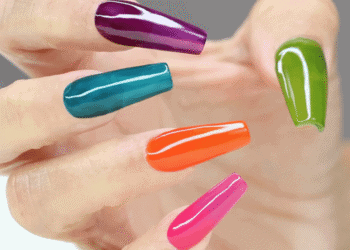
The powder comes in lots of colours, so you don’t necessarily need traditional nail polish on top.
The result is generally thicker and more durable than regular polish, but the application process is different from both traditional acrylic extensions and gel polish.
What Are Acrylic Dipped Nails?
This is where things can get confusing.
Dip powder is often described as an acrylic powder system because the powder contains acrylic-based polymers. However, a dip manicure isn’t applied in exactly the same way as traditional liquid-and-powder acrylic nails.
With conventional acrylic nails, a liquid monomer is combined with acrylic powder to create a bead that is sculpted onto the nail.
With dip powder, the powder is applied over a resin or adhesive layer.
So while both systems use acrylic polymers, dip powder and traditional sculpted acrylic nails aren’t the same manicure technique.
That’s why you’ll often hear people refer to dip powder as “acrylic dipping.”
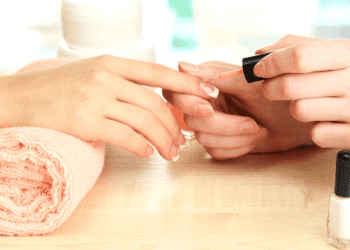
How Does a Dip Powder Manicure Work?
The exact process can vary between salons and brands, but the basic steps usually look something like this.
1. Nail Preparation
The nails are cleaned and shaped first.
The technician may gently push back the cuticles and remove surface oils before preparing the nail plate.
This step is important because the products need a clean surface to adhere properly.
2. Base or Bonding Product
A special base coat, resin or adhesive is applied to the nail.
This is what allows the powder to stick.
3. The Powder
The nail is either dipped into a container of coloured powder or the powder is carefully applied over the nail.
Depending on the salon and system, multiple layers may be used.
This is where the manicure gets its name.
4. Activator
An activator is then applied to help harden and set the layers.
5. Shaping and Buffing
Once the product has hardened, the technician shapes and smooths the nail.
This is important because several layers of powder can initially leave the surface looking thicker than desired.
6. Top Coat
Finally, a top coat is applied to create a smooth, shiny finish.
The result can look remarkably similar to polished natural nails.
How Long Do Dip Powder Nails Last?
One of the main reasons people love dip powder is its durability.
A dip manicure can often last around two to four weeks, depending on the individual, the products used and how well the nails are cared for.
Some people may get longer wear, while others experience lifting or chipping sooner.
Your lifestyle matters too.
If you’re constantly washing dishes, gardening, cleaning or using your nails as tools, your manicure is likely to experience more wear and tear.
Even if the colour still looks good after several weeks, you’ll eventually see your natural nail growing underneath.
That’s usually when it’s time for maintenance or removal.
Are Dip Powder Nails Strong?
They can be.
Because several layers of powder and resin are built up on the nail, dip manicures tend to be more durable than ordinary nail polish.
They can provide additional protection to people whose natural nails are thin or prone to breaking.
But there’s a catch.
More durable doesn’t automatically mean healthier.
The condition of your natural nails depends heavily on preparation, application and removal.
A dip manicure applied gently and removed properly can be very different from one that’s aggressively filed, picked or peeled away.
Do Dip Powder Nails Damage Your Natural Nails?
The dip powder itself isn’t necessarily the main culprit.
The potential problems often come from how the nails are prepared and how the product is removed.
Aggressive buffing can thin the natural nail plate.
Picking or peeling off the manicure can pull away layers of natural nail.
Over-filing during removal can also leave nails thin and fragile.
That’s why I’d always choose a qualified nail professional and avoid attempting to rip or peel the product away when you’re ready for a change.
If you’re removing dip powder at home, follow the manufacturer’s instructions carefully.
Are Dip Powder Nails Better Than Acrylic?
This is really a matter of personal preference.
Dip Powder
Pros:
Durable
Usually doesn’t require a UV/LED curing lamp for the powder system
Lots of colours available
Can look natural when applied correctly
Often lasts several weeks
Cons:
Removal can take time
Over-filing can damage nails
Can become bulky if too many layers are applied
Not all systems are created equally
Traditional Acrylic
Pros:
Excellent for creating extensions
Can dramatically change nail length and shape
Very durable
Can be sculpted into different forms
Cons:
Strong odour during application
Requires liquid monomer
Removal can be time-consuming
Improper application or removal can damage the natural nail
If I simply wanted durable colour over my natural nails, I’d probably lean towards dip powder.
If I wanted long extensions or a completely different nail shape, traditional acrylic might make more sense.
Is Dip Powder Better Than Gel?
Again, there’s no universal winner.
Dip powder and gel polish are both popular because they last much longer than conventional nail polish.
Gel polish is applied as a liquid and cured under a UV or LED lamp.
Dip powder uses a resin and powder system that hardens with an activator.
Dip Powder
Thick and durable
Often good for weak or breakable nails
No lamp usually required for the powder itself
Can be very long-lasting
Gel Polish
Generally thinner
Often has a more natural polish-like appearance
Usually cured under LED/UV light
Can provide excellent shine
Often easier to soak off than some enhancement systems
Neither is automatically “healthy” or “unhealthy.”
The application and removal process matters enormously.
Does Dip Powder Make Nails Grow?
No.
This is a common misconception.
Dip powder doesn’t make your nail matrix produce nail faster.
Your natural nails continue growing underneath the manicure at their normal rate.
What can happen is that a durable manicure protects the nail from everyday breakage.
If your nails normally break before they reach a certain length, protecting them may allow you to retain more of the length you’re already growing.
That can make it seem as though your nails are growing faster.
They’re not necessarily growing faster — you’re simply losing less of them.
Can You Get Dip Powder on Short Nails?
Absolutely.
You don’t need long nails to enjoy a dip powder manicure.
In fact, I think short dip powder nails can look wonderfully neat and polished.
The product can be applied over short natural nails to provide colour and additional strength.
If you want significant length, however, you’ll need an extension system rather than simply dipping a very short nail into powder.
Can Dip Powder Be Used on Natural Nails?
Yes.
That’s one of the reasons it’s so popular.
You don’t necessarily need nail extensions.
A dip powder manicure can be applied over your natural nails to create a durable, coloured coating.
If your nails are naturally weak, the additional structure may help prevent some everyday breakage.
But I wouldn’t use a dip manicure to cover up nails that are painful, infected or showing unexplained changes.
Those issues need attention rather than camouflage.
Can You Do Dip Powder Nails at Home?
Yes, home dip powder kits are widely available.
View some ideas on Amazon.com >
The basic concept isn’t especially complicated, but getting a professional-looking result can take practice.
The biggest challenges for me would be:
Getting the powder evenly distributed
Avoiding thick layers
Keeping product away from the cuticle
Creating a smooth shape
Preventing lifting
Removing the product safely
A professional nail technician has much more experience with these details.
If you do try a DIY kit, I’d carefully follow the manufacturer’s instructions and avoid sharing powder containers between people.
Is It Hygienic to Dip Your Nails Into a Shared Powder Pot?
This is an important question.
If you’re having a salon manicure, I’d ask how the salon handles the powder.
Repeatedly dipping different clients’ nails directly into the same communal pot isn’t ideal from a hygiene perspective.
A more hygienic approach is for the technician to dispense powder into a separate container or use a method that prevents direct contact between the client’s nails and the main product supply.
This is one question I’d be perfectly comfortable asking before booking.
Good nail salons shouldn’t be offended by sensible hygiene questions.
How Do You Remove Dip Powder?
Removal should be done carefully.
Typically, the surface is gently filed to break through the top layer, followed by soaking in acetone to soften the remaining product.
The softened material can then be gently removed.
The exact process depends on the particular dip powder system.
What I wouldn’t do is peel, pick or scrape it aggressively from the nail.
If you have to fight with it, stop.
A professional removal may be a much safer option.
How Do You Look After Nails After Dip Powder?
Once the manicure has been removed, I like the idea of giving the nails a little extra TLC.
Keep them reasonably short if they’re fragile and moisturise your hands and cuticles regularly.
Cuticle oil can help keep the surrounding skin comfortable, particularly after repeated exposure to acetone.
I’d also avoid immediately buffing the natural nail aggressively to make it shiny.
Your nail doesn’t need to be polished to perfection when you’re taking a break from enhancements.
Sometimes leaving it alone is the kindest thing you can do.
What If My Nails Feel Thin After Dip Powder?
Don’t automatically assume the dip powder itself has “destroyed” your nails.
Look at the whole process.
Were your nails heavily filed before application?
Was the product peeled off?
Were the nails scraped aggressively during removal?
Was the manicure repeatedly removed and reapplied without allowing the nails to recover from rough treatment?
Those factors may be more relevant.
If your nails feel unusually thin or painful, I’d stop using enhancements for a while and allow the nail to grow out.
If you notice persistent pain, discolouration, swelling or separation from the nail bed, it’s worth seeking professional medical advice.
My Final Thoughts on Dipped Nails
I can understand why dip powder nails have become so popular.
They offer a combination that’s hard to resist: attractive colour, durability and additional structure without necessarily having to wear traditional acrylic extensions.
For someone who wants neat, long-lasting colour over natural nails, they can be a fantastic option.
But I’d never describe dip powder as completely risk-free.
The manicure itself is only part of the story.
Preparation, application, hygiene and removal all matter.
If I were getting a dip powder manicure, I’d look for a reputable salon, ask how they handle powder hygiene and make sure the technician doesn’t aggressively file my natural nails.
And when it comes time for removal, I’d resist the temptation to pick it off — even if I’m desperate to see my natural nails again!
The Bottom Line
Dip powder is essentially a durable nail enhancement system using coloured powder and resin/adhesive rather than traditional liquid-and-powder acrylic.
It can give natural nails a glossy, long-lasting finish and may help protect them from everyday breakage.
Just remember: stronger-looking nails aren’t necessarily healthier nails, and good nail care before, during and after your manicure is what makes the biggest difference.
For me, dip powder is definitely worth considering — as long as it’s applied and removed with care.