If your nails have ever become thin, weak, peeling or painfully brittle after regular gel manicures, acrylics or simply years of being exposed to everyday wear and tear, you’ll know how frustrating it can be.
I love the look of polished, groomed nails, but there’s nothing quite so annoying as finally getting your nails looking lovely only to discover that they’re splitting, peeling or breaking underneath.
That’s where IBX nail treatment comes in.
IBX has become a popular professional nail treatment for people who want to strengthen and protect their natural nails, particularly when they’ve been weakened by artificial enhancements or repeated manicures.
Unlike a conventional nail strengthener that simply sits on the surface, IBX is designed to work within the upper layers of the nail plate and is cured as part of the professional application process.
But does it genuinely repair damaged nails, or is it simply another clever salon treatment with impressive marketing?
I wanted to take a closer look.
1. What Is IBX Nail Treatment?
IBX is a professional nail treatment system designed to strengthen and protect the natural nail.
The system uses two products, generally known as IBX Repair and IBX Strengthen. They’re applied to the natural nail separately and used with heat and UV/LED curing as part of the treatment process.
The idea behind IBX is rather different from a traditional nail polish or hardening treatment.
Instead of simply creating a coating over the nail, the manufacturer says the system penetrates the upper layers of the nail plate. Once cured, it forms an interpenetrating polymer network within those layers.
In simple terms, IBX is intended to provide support within the nail rather than simply creating a hard shell over it.
That makes it particularly interesting if your nails are thin, flexible, peeling or prone to splitting.
2. What Can IBX Be Used For?
IBX is commonly used for natural nails that have become:
* Thin
* Weak
* Brittle
* Peeling
* Splitting
* Prone to breaking
* Damaged following gel or acrylic removal
* Vulnerable around the free edge
It can also be used underneath gel polish and other nail enhancements as a protective treatment. The manufacturer specifically promotes the system for both natural nails and nails underneath enhancement products.
One thing I particularly like about this concept is that IBX isn’t designed purely to make the nail rock-hard.
That’s important because harder doesn’t necessarily mean healthier.
A nail needs some flexibility. If you make a fragile nail excessively rigid, it can become more susceptible to cracking or breaking.
The goal with a treatment such as IBX is therefore to improve resilience rather than simply turn your nails into little pieces of plastic.
3. How Does IBX Work?
The IBX system is based around two products.
Step One: IBX Repair
IBX Repair is designed to target areas of the nail that are particularly vulnerable or damaged.
The product is applied to the nail and heat is used to encourage the treatment into the nail plate. The nail is subsequently cured under a UV or LED lamp and excess product is removed.
Step Two: IBX Strengthen
IBX Strengthen is then applied to provide additional reinforcement.
Again, heat and curing are involved. The combination of the product and curing process is intended to create the strengthening network within the upper layers of the nail plate.
The exact application procedure can vary according to the condition of the nails and the professional’s instructions, so this isn’t something I’d recommend trying to improvise at home.
4. What Happens During an IBX Treatment?
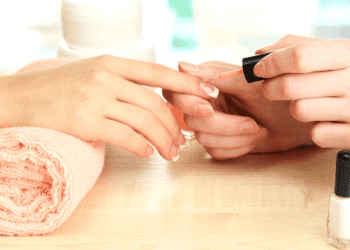
A salon appointment is generally quite straightforward, although it’s more involved than simply painting on a nail strengthener.
The nails are prepared first. The technician applies the appropriate IBX product, uses controlled heat, and then cures the product using the appropriate lamp.
The IBX Repair stage is followed by IBX Strengthen, with further heating and curing before the nail is cleansed.
The whole process can therefore feel a little more technical than a standard manicure.
And that’s because it is.
IBX is a professional system, rather than simply another bottle of clear nail polish.
5. Does IBX Actually Repair Damaged Nails?
This is the question I’d really want answered before spending money on a treatment.
And here’s where it’s important to separate IBX-specific claims from the wider scientific evidence around nail-strengthening treatments**.
IBX’s manufacturer describes the system as penetrating the upper layers of the nail and forming an interpenetrating polymer network after curing.
However, there appears to be limited published, independent clinical research specifically evaluating the IBX system itself. So I wouldn’t describe IBX as a medically proven treatment for every form of nail damage.
That doesn’t necessarily mean it doesn’t work.
It simply means we should be sensible about the claims.
There is scientific evidence that certain topical nail treatments can improve brittle and weak nails. For example, a peer-reviewed study involving 60 people with brittle or weak nails found significant improvements in nail appearance, resistance and distal breakage after use of a different topical formulation containing hyaluronic acid and Pistacia lentiscus.
That study was not an IBX study, so we shouldn’t use it as proof that IBX itself produces the same results.
What it does tell us is that topical approaches to improving the appearance and resilience of brittle nails are a legitimate area of dermatological research.
6. What Results Can You Expect?
This is where I’d keep expectations realistic.
If your nails have been weakened by gel manicures or rough removal, IBX may help provide additional support while the damaged portion grows out.
You might notice:
* Less peeling
* Fewer breaks
* Improved nail resilience
* Less splitting at the free edge
* A smoother-looking nail
* Better ability to grow your nails without them constantly snapping
But IBX isn’t going to magically transform a damaged nail overnight.
Your fingernails grow slowly, and the damaged section of nail plate has to grow out naturally.
That’s why a series of treatments may be recommended when nails are particularly compromised.
7. How Many IBX Treatments Do You Need?
There’s no single number that applies to everyone.
Someone whose nails have experienced minor damage might need considerably less treatment than someone whose nails have been repeatedly exposed to gel, acrylics or aggressive removal.
Some salon guidance recommends treatments at regular intervals for significantly damaged nails, while maintenance treatments may be used less frequently.
I’d be wary of any promise that says one treatment will completely restore severely damaged nails.
Think of IBX as supporting the nail while it grows, rather than reversing months or years of damage instantly.
8. Can IBX Be Used Under Gel Polish?
Yes.
One of the reasons IBX has become popular among people who enjoy gel manicures is that it can be used as a strengthening treatment before applying gel polish or other nail enhancements.
This makes sense if you love gel manicures but find that your natural nails become fragile underneath them.
However, I wouldn’t regard IBX as permission to carry on with poor nail practices indefinitely.
If your nails are becoming progressively thinner because gel products are being aggressively removed or the nail plate is repeatedly over-filed, the underlying cause still needs addressing.
IBX can provide support, but it shouldn’t be used to disguise ongoing damage.
9. Is IBX Better Than a Regular Nail Strengthener?
This depends on what you mean by “better.”
A traditional nail strengthener generally sits on the nail surface and creates a coating.
IBX is designed to work differently, with the product penetrating the upper layers of the nail plate and being cured to form an interpenetrating polymer network.
That’s an appealing difference if you’re dealing with nails that are genuinely fragile.
Another advantage is that IBX doesn’t have to leave you with a thick, glossy layer of product. It can be used underneath another manicure.
Personally, I’d see IBX as more of a professional strengthening treatment than a replacement for a basic at-home nail conditioner.
10. Is IBX Suitable for Peeling Nails?
It can be particularly appealing if your problem is nails that peel or split in layers.
Peeling nails can be caused by repeated wetting and drying, physical trauma, manicure practices and other factors.
However, not every case of nail peeling has the same cause.
If your nails suddenly become very brittle, change colour, develop ridges, become thickened or painful, or you notice changes affecting several nails, it’s worth discussing the problem with a doctor or dermatologist rather than assuming you simply need a nail-strengthening treatment.
A cosmetic treatment isn’t a substitute for investigating an underlying nail problem.
11. Is IBX Good After Gel Nail Removal?
This is probably one of the situations where I’d be most tempted to consider it.
Gel polish itself isn’t necessarily the enemy of healthy nails. The trouble can come from preparation and removal.
Over-buffing the natural nail, peeling off gel, filing too aggressively or repeatedly removing layers of the nail plate can leave nails thin and vulnerable.
IBX is specifically marketed for strengthening natural nails and for use beneath gel polish and other enhancements.
But here’s my golden rule:
**Don’t use a strengthening treatment to compensate for damaging nail habits.**
Gentle preparation and careful removal are just as important.
12. Does IBX Make Nails Grow Faster?
This is one claim I’d be cautious about.
IBX isn’t a growth stimulant in the traditional sense.
Your nails grow from the nail matrix underneath the skin, and the rate of growth is influenced by factors including age, general health and individual variation.
What IBX may potentially do is help your existing nail withstand everyday wear and tear.
And that can *look* like faster growth.
Why?
If your nails normally break when they reach a certain length but become more resilient, you may finally be able to retain the length you’re already growing.
So rather than thinking “IBX makes my nails grow faster,” I’d think:
“IBX may help me keep the length I grow.”
That’s an important distinction.
13. How Long Does IBX Last?
IBX isn’t like gel polish, where you’re waiting for a visible coating to grow out.
The treatment is incorporated into the upper layers of the nail plate and the nail itself continues to grow.
As new nail emerges from the matrix, it hasn’t received the treatment in the same way as the existing nail.
That’s one reason maintenance treatments can be useful for people who want ongoing strengthening.
Your technician can advise you about an appropriate schedule based on your nail condition and manicure routine.
14. Are There Any Downsides?
There are a few things I’d consider before booking.
It’s a professional treatment
IBX is designed as a professional system, and the application involves specific products, heat and curing.
I’d therefore choose a properly trained nail professional rather than trying to recreate the procedure using random products at home.
It takes longer than painting on a strengthener
You’re looking at preparation, multiple product stages, heating, curing and cleansing.
It’s not an instant five-minute fix.
It can become expensive
If you need repeated salon treatments, costs can add up.
I’d weigh up the cost against the actual condition of your nails and whether you can address the underlying reason they’re becoming damaged.
It isn’t a cure for nail disease
This is perhaps the most important point.
If your nails have significant discolouration, thickening, pain, separation from the nail bed, persistent inflammation or unexplained changes, get them assessed rather than simply covering them with cosmetic products.
15. Is IBX Safe?
IBX is designed for professional nail use, but that doesn’t mean everyone should automatically have it applied.
As with any professional nail product, proper application matters.
You should tell your nail technician about any known allergies or sensitivities to nail products before treatment.
I’d also avoid applying products over nails or surrounding skin that are visibly infected, inflamed or injured until you’ve established what’s causing the problem.
If you have a suspected nail infection or unexplained nail changes, professional medical advice is more appropriate than simply adding another cosmetic treatment.
My Verdict: Does IBX Work?
So, after looking into IBX, would I try it?
Yes — particularly if my natural nails had become weak and fragile after repeated gel manicures or other cosmetic nail treatments.
I like the fact that IBX is designed differently from a conventional surface coating. Its professional application and curing process are intended to reinforce the upper layers of the nail plate rather than simply creating a thick layer over the top.
But I wouldn’t call it a miracle cure.
The biggest caveat is the evidence.
There is interesting scientific research showing that topical treatments can improve the condition of brittle nails, but the published clinical study I found was on a different formulation, not IBX.
So I’d put IBX somewhere between “clever salon treatment worth trying” and “clinically proven nail repair miracle” — much closer to the former.
For nails that have simply become weak, thin and prone to breaking, it may be a useful part of a nail-recovery routine.
But if you really want your nails to improve, I’d combine it with good nail habits:
* Don’t peel off gel polish.
* Avoid aggressive filing and buffing.
* Give damaged nails time to grow out.
* Keep your nails and cuticles moisturised.
* Wear gloves for prolonged contact with water and cleaning products.
* Don’t use your nails as tools.
* Keep nail length manageable while they’re recovering.
* Give your nails breaks from treatments if they are repeatedly becoming damaged.
And, perhaps most importantly, don’t expect a single salon treatment to undo months of nail trauma.
The Bottom Line
IBX is an interesting professional nail-strengthening system designed to work within the upper layers of the nail plate rather than simply sitting on its surface.
It may be particularly useful for people with thin, peeling or fragile nails and for those who regularly wear gel polish or other nail enhancements.
The treatment certainly has a compelling concept, and there is broader scientific evidence that topical treatments can improve brittle nail condition. However, there isn’t enough independent published clinical evidence specifically on IBX for me to say that every one of its repair claims has been scientifically established.
For me, that’s not a reason to dismiss it.
I’d simply approach IBX with realistic expectations: it may help strengthen vulnerable nails, but healthy nail habits and allowing damaged nail to grow out are just as important.
If your nails are weak because of repeated manicures, IBX could be a worthwhile professional treatment to put on your beauty wish list.
Just don’t expect it to perform miracles overnight — your nails still have to do the growing!