 Moringa seems to be everywhere in the wellness world these days. You can find moringa powders, teas, capsules, oils, and even whole seeds being promoted for everything from improved energy to better blood sugar control.
One claim that caught my attention is that claims of using moringa seeds for weight loss.
It sounds promising. After all, moringa is a nutrient-rich plant containing proteins, healthy fats, antioxidants, and numerous naturally occurring plant compounds. But whenever I see a food being described as a “fat burner,” I like to look beyond the marketing and see what the science actually says.
And with moringa seeds, the answer is a little more complicated than some websites would have you believe.
Moringa seeds may be an interesting addition to a balanced diet, but there currently isn’t convincing evidence that eating them will directly cause meaningful weight loss in humans.
View more Weight Loss Ideas >
Here’s what we know so far.
What Are Moringa Seeds?
Moringa seeds come from Moringa oleifera, a fast-growing tree native to parts of South Asia but now grown throughout many tropical and subtropical regions.
You may also hear it called:
The drumstick tree
Horseradish tree
Ben oil tree
Miracle tree
Virtually every part of the moringa plant has traditionally been used in some way, including the leaves, pods, flowers, roots, and seeds.
The leaves are probably the best-known part today because they’re dried and sold as moringa powder.
The seeds are different.
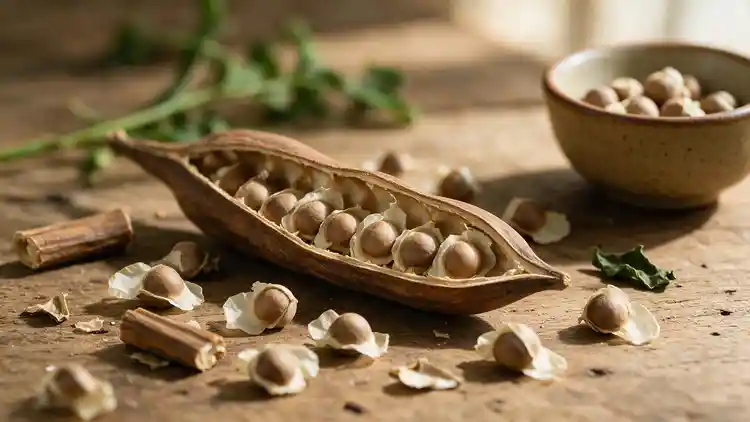
Inside the long moringa pods are round seeds surrounded by a papery covering. The kernels can be eaten after suitable preparation, while oil extracted from them—often called ben oil—has traditionally been used for both food and cosmetic purposes.
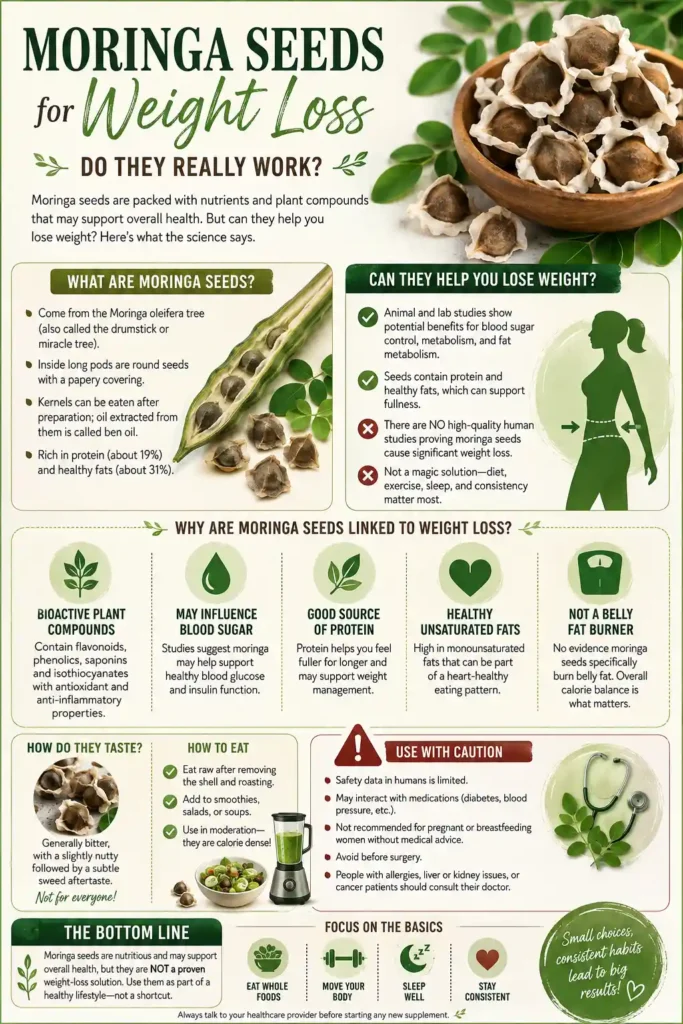
A scientific review of moringa seeds found that they contain considerable amounts of protein and fat. Average values reported across studies were around 19% protein and 31% lipids, although their exact nutritional composition varies depending on variety, growing conditions, and processing.
Moringa seed oil is particularly rich in monounsaturated fatty acids and also contains plant sterols and tocopherols.
So there’s certainly more going on here than you might expect from such a small seed.
Can Moringa Seeds Help You Lose Weight?
This is where we need to separate interesting early research from proven results.
At the moment, there aren’t good-quality human clinical trials demonstrating that moringa seeds themselves produce significant weight loss.
A scientific review specifically examining moringa seeds and their oil noted that although experimental research had suggested potentially useful biological effects, pharmacological effects of moringa seeds had not been adequately studied in humans.
Some laboratory and animal research has generated interest in moringa for metabolic health, blood glucose regulation, inflammation, and fat metabolism.
However, results from an animal or laboratory experiment cannot automatically be assumed to occur in people.
That’s an important distinction because many supplement advertisements take results from preliminary animal studies and present them as though the same thing has already been proven in humans.
It hasn’t.
Even research involving moringa leaves rather than seeds doesn’t provide convincing evidence for weight loss. In one randomized controlled trial involving 200 adults living with HIV, six months of moringa leaf supplementation did not produce a significant difference in body weight or BMI compared with the control group.
That doesn’t prove moringa seeds have no useful health effects. It simply means we shouldn’t describe them as a scientifically proven weight-loss treatment.
Why Are Moringa Seeds Linked With Weight Loss?
There are several reasons the idea has become popular.
1. Moringa Contains Bioactive Plant Compounds
Moringa seeds contain various biologically active substances, including phenolic compounds, flavonoids, saponins, tannins, and isothiocyanates.
Scientists are interested in these compounds because some have antioxidant, anti-inflammatory, or metabolic effects in experimental studies.
You may therefore see claims that moringa:
Speeds up metabolism
Encourages fat burning
Blocks fat formation
Controls appetite
Improves insulin sensitivity
Some of these possibilities have experimental research behind them, but that is very different from demonstrating that eating a few moringa seeds makes people lose weight.
2. Moringa May Influence Blood Sugar
Another reason moringa gets linked with weight management is its potential effect on glucose metabolism.
Laboratory and animal studies have suggested that compounds within moringa may influence blood glucose and insulin activity.
Maintaining relatively stable blood glucose can certainly be useful as part of an overall healthy eating pattern.
But this still doesn’t mean moringa seeds are a treatment for high blood sugar or a shortcut to losing weight.
Anyone taking medication for diabetes should be particularly cautious about adding concentrated herbal supplements without discussing them with a healthcare professional.
3. The Seeds Contain Protein
Protein tends to be more filling than rapidly digested carbohydrates, which is one reason protein-rich foods can be helpful when you’re trying to control hunger.
Moringa seeds contain a reasonable amount of protein, although they’re also relatively high in fat and therefore aren’t a calorie-free snack.
That means eating large quantities in the hope of losing weight could actually be counterproductive.
Healthy foods still contain calories.
4. They Contain Unsaturated Fat
Moringa seed oil contains a high proportion of monounsaturated fatty acids.
These types of fats can certainly form part of a healthy diet.
Again, though, they aren’t magical fat-burning substances. Dietary fats are energy dense, regardless of whether they come from olive oil, nuts, avocado, or moringa seeds.
Do Moringa Seeds Burn Belly Fat?
This is probably one of the biggest claims you’ll encounter online.
Unfortunately, there is no convincing evidence that moringa seeds specifically burn belly fat.
Our bodies don’t selectively burn abdominal fat because we’ve eaten a particular seed, herb, tea, or spice.
When body fat decreases, where it disappears first is influenced by factors including genetics, hormones, sex, age, activity levels, and overall energy balance.
You therefore can’t reliably tell your body:
“Take the fat from my stomach first.”
The most reliable approach to reducing excess abdominal fat remains the less glamorous combination of a nutritionally balanced diet, appropriate calorie intake, regular activity, resistance exercise, adequate sleep, and long-term consistency.
Moringa can potentially be part of that diet.
It isn’t a replacement for it.
What Does the Research Say About Moringa and Obesity?
The most interesting results currently come from preclinical studies.
For example, researchers have investigated moringa extracts in animals with obesity and metabolic problems.
One mouse study involving moringa seed extract found improvements in some measures of glucose metabolism and insulin sensitivity. However, the moringa seed extract did not significantly change food intake or body weight in that experiment.
This is a useful example of why we need to be careful with headlines.
Something can potentially influence metabolic markers without necessarily producing weight loss.
And because this was animal research, it still doesn’t tell us what would happen if someone simply ate moringa seeds every day.
Moringa Seeds vs. Moringa Leaves
You’ll often see the two discussed as though they’re interchangeable, but they aren’t.
Moringa leaves and moringa seeds have different nutritional profiles and concentrations of plant compounds.
Moringa leaf powder is widely sold as a nutritional supplement and is generally much easier to find.
Whole seeds and concentrated seed extracts are less commonly consumed in Western diets.
Memorial Sloan Kettering Cancer Center notes that moringa leaves, seeds, and powders are consumed, but it also advises people to speak with their healthcare provider before using moringa supplements because concentrated herbal preparations may interact with medication.
So if you’ve read a study about moringa leaf powder, don’t automatically assume those findings also apply to moringa seeds.
Likewise, research involving highly concentrated moringa seed extracts shouldn’t be interpreted as evidence that eating whole seeds produces the same effect.
How Do Moringa Seeds Taste?
Don’t expect them to taste like sunflower seeds.
Moringa seeds are generally described as having a noticeably bitter taste.
Their bitterness is actually considered one of the biggest obstacles to using them more widely as food. Researchers investigating moringa-based foods have experimented with processing methods to make seed products more palatable.
Some people describe the initial taste as similar to a bitter nut, followed by a slightly sweet sensation.
They certainly won’t suit everyone.
How Many Moringa Seeds Should You Eat for Weight Loss?
This is one area where I’d be particularly cautious.
You’ll find websites recommending everything from one seed a day to handfuls of seeds.
But there isn’t an established, evidence-based dose of whole moringa seeds for weight loss.
That’s because we don’t yet have appropriate human clinical trials demonstrating:
What dose would be effective
Whether it produces weight loss
What quantity is safe long term
Whether effects differ according to age or health conditions
How whole seeds compare with extracts
So I wouldn’t treat arbitrary online recommendations such as “eat five seeds every morning” as medically established instructions.
They aren’t.
Can You Eat Moringa Seeds Every Day?
Moringa has a long history of use as food in parts of the world, but that doesn’t mean unlimited quantities of every part of the plant are automatically safe.
Research into moringa seeds has highlighted the need for more safety data, particularly when concentrated extracts are involved. Laboratory studies have identified potential cytotoxic or mutagenic effects at certain concentrations, although these experiments do not tell us that ordinary food use causes the same effects in humans.
The sensible takeaway isn’t that moringa seeds are dangerous.
It’s that we simply don’t have enough human research to justify consuming large medicinal quantities every day.
More is definitely not necessarily better.
Possible Side Effects of Moringa Seeds
Human safety data specifically for moringa seeds are fairly limited.
As with many foods and herbal supplements, potential problems can include digestive upset or allergic reactions.
Rare allergic reactions to moringa have also been reported. A published case report, for example, described anaphylaxis following consumption of moringa leaves.
That doesn’t mean most people will experience an allergy, but it’s another reminder that “natural” doesn’t mean risk-free.
Memorial Sloan Kettering also advises caution with concentrated moringa supplements because they may interact with medications.
Who Should Be Particularly Careful With Moringa?
I’d speak with a doctor, pharmacist, or registered dietitian before using moringa seeds or concentrated moringa supplements if you:
Take prescription medication
Take diabetes medication
Take medication affecting blood pressure
Are receiving chemotherapy
Have liver or kidney problems
Are pregnant
Are breastfeeding
Have significant allergies
Are preparing for surgery
There is a particularly good reason for anyone undergoing cancer treatment to discuss herbal supplements with their medical team.
An animal study investigating moringa seed extract alongside chemotherapy found a potentially negative interaction in a breast cancer model, leading the researchers to recommend caution regarding concurrent use.
That doesn’t establish what happens in humans, but it’s enough reason not to experiment without medical guidance.
Be Careful With “Moringa Weight-Loss” Supplements
I’d also make an important distinction between eating moringa as a food and buying a supplement marketed specifically for rapid weight loss.
Weight-loss supplements are an area where caution is warranted.
The National Center for Complementary and Integrative Health warns that many dietary supplements promoted for rapid weight loss haven’t been shown to provide lasting weight-loss benefits, while some may contain ingredients that cause harmful effects.
There’s also a broader problem with supplement quality.
Unlike prescription medicines, dietary supplements aren’t approved by the FDA for safety and effectiveness before being marketed in the same way medicines are. Products sold online may also differ considerably from the preparations used in research studies.
NCCIH additionally warns that some supplements marketed for weight loss have been found to contain undeclared prescription drugs or other ingredients.
So I’d be especially wary of products promising things like:
“Lose 10 pounds with moringa!”
“Melt belly fat naturally!”
“No diet or exercise required!”
Those are marketing claims, not established science.
Can Moringa Still Be Part of a Weight-Loss Diet?
Absolutely.
There’s an important difference between saying:
“Moringa seeds cause weight loss.”
and:
“Moringa can be included in a healthy diet while you’re losing weight.”
The second statement is much more reasonable.
Instead of expecting one ingredient to do all the work, I’d focus on creating meals that contain:
Plenty of vegetables
Fruit
Beans and pulses
Whole grains
Lean or plant-based protein
Nuts and seeds
Healthy fats
Plenty of water
Then combine that with regular movement and strength-building activity that suits your fitness level.
That’s not as exciting as discovering a miracle seed, but it has far better evidence behind it.
What About Moringa Tea for Weight Loss?
Moringa tea is usually made from moringa leaves, rather than the seeds.
It’s often marketed as a detox or slimming drink.
An unsweetened herbal tea is naturally very low in calories, so replacing sugary drinks with moringa tea could indirectly reduce your calorie intake.
That’s potentially useful.
But it isn’t because the tea is melting fat.
It’s because you’ve replaced a calorie-containing beverage with a low-calorie one.
The same principle applies to many unsweetened herbal teas.
Are Moringa Seeds an Appetite Suppressant?
There’s currently insufficient human evidence to say that moringa seeds are a reliable natural appetite suppressant.
You may notice anecdotal reports from people saying they felt less hungry after eating them, but testimonials aren’t the same as controlled research.
Because the seeds contain protein and fat, they may contribute to fullness just as other protein- and fat-containing foods can.
But we don’t have convincing evidence that moringa contains some unique appetite-switching compound that causes substantial weight loss.
Do Moringa Seeds Speed Up Your Metabolism?
This is another claim I’d take with a large pinch of salt.
Your metabolism is influenced by many things, including:
Body size
Muscle mass
Age
Genetics
Hormones
Physical activity
Food intake
No convincing human evidence currently shows that eating moringa seeds produces a meaningful increase in metabolic rate.
If improving metabolism is your goal, maintaining or increasing muscle through resistance exercise is much better supported by evidence.
The Bigger Problem With “Weight-Loss Foods”
I’ve never been particularly fond of calling individual foods “weight-loss foods.”
It creates the impression that one ingredient can undo everything else happening in your diet.
Unfortunately, that’s rarely how nutrition works.
Green tea won’t compensate for consistently overeating.
Apple cider vinegar won’t melt abdominal fat.
And moringa seeds aren’t likely to make the pounds disappear while the rest of your lifestyle stays exactly the same.
What foods can do is help create a dietary pattern that makes maintaining an appropriate calorie intake easier.
Foods rich in protein, fiber, water, and nutrients can help us feel satisfied while still eating well.
That’s a far more useful way of thinking about weight management.
So, Are Moringa Seeds Worth Trying?
If you’re interested in moringa as a food rather than a miracle slimming remedy, I think that’s the healthiest way to approach it.
Moringa seeds contain protein, oils, and interesting plant compounds, and researchers continue to investigate their potential nutritional and health applications.
But the science hasn’t reached the point where we can say:
“Eat moringa seeds and you’ll lose weight.”
We don’t currently have strong human evidence supporting that claim.
And I’d be especially cautious about concentrated moringa seed extracts or supplements promising dramatic weight-loss results.
Frequently Asked Questions
1. Can moringa seeds reduce belly fat?
There is currently no convincing evidence that moringa seeds specifically reduce abdominal fat. Fat loss occurs throughout the body and depends largely on overall energy balance, diet, activity, genetics, hormones, and other factors.
2. Should I eat moringa seeds before or after meals?
There isn’t enough evidence to show that consuming moringa seeds at a particular time of day improves weight loss.
3. Can I eat moringa seeds on an empty stomach?
Some people do, but there isn’t evidence that taking them on an empty stomach improves their effects. If they cause digestive discomfort, eating them with food may be preferable.
4. Are moringa seeds better than moringa powder?
They are different products. Most commercial moringa powder is made from the leaves, which have a different nutritional and phytochemical composition from the seeds. Research involving one shouldn’t automatically be applied to the other.
5. Is moringa a fat burner?
Moringa shouldn’t be considered a proven fat-burning supplement. Laboratory and animal research has explored possible effects on metabolism, but convincing human evidence demonstrating significant fat loss is lacking.
6. Can I take moringa while taking medication?
Moringa supplements may potentially interact with medications. Memorial Sloan Kettering advises discussing moringa supplements with your healthcare provider, particularly because concentrated herbal supplements may affect how some medicines work.
7. Is moringa safe during pregnancy?
Pregnant or breastfeeding women should speak to their healthcare provider before taking moringa products or supplements. Safety information for concentrated preparations is limited.
My Final Thoughts
Moringa seeds are genuinely interesting from a nutritional point of view.
They contain protein, monounsaturated fats, antioxidants, and numerous plant compounds researchers are continuing to investigate.
What they don’t currently have is strong evidence proving that they cause significant weight loss in humans.
So if I were adding moringa seeds to my diet, I’d think of them as an interesting food rather than a slimming treatment.
A few seeds won’t magically melt belly fat, boost your metabolism overnight, or compensate for an unhealthy diet.
For sustainable weight management, the fundamentals still matter far more: eating nutritious foods you enjoy, getting enough protein and fiber, keeping portions appropriate, moving regularly, sleeping well, and finding habits you can actually maintain.
Moringa may have a place alongside those habits.
I just wouldn’t expect it to do the hard work for me.
Resources
National Institutes of Health (NIH/PubMed Central) – Moringa Oleifera Seeds and Oil: Characteristics and Uses for Human Health
A detailed review covering moringa seed nutrition, protein, oils, bioactive compounds, and potential health effects.
Read the NIH article
National Institutes of Health (NIH/PubMed Central) – Treatments and Uses of Moringa Oleifera Seeds in Human Nutrition
Particularly useful for information about the nutritional composition of moringa seeds and their use as a food source.
Read the NIH article
Memorial Sloan Kettering Cancer Center – Moringa Oleifera
A good authoritative source for moringa’s potential benefits, limitations, supplement safety, pregnancy precautions, and possible medication interactions.
Read the Memorial Sloan Kettering guide