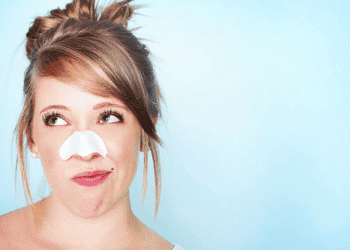
Acne has an annoying habit of appearing at exactly the wrong time. Whether it is a few blackheads around my nose, a breakout on my chin or one enormous pimple that seems to arrive overnight, I completely understand the temptation to raid the kitchen cupboard and try whatever home remedy is trending online to heal acne.
The problem is that “natural” does not automatically mean gentle or effective.
Some popular DIY acne treatments can irritate the skin so badly that they actually make redness and breakouts worse. Toothpaste, lemon juice and baking soda are three examples I would leave well alone.
The American Academy of Dermatology (AAD) recommends gentle skin care alongside ingredients with evidence behind them, including salicylic acid and benzoyl peroxide. It also warns that viral DIY heal acne tricks are not necessarily safe just because they use familiar household ingredients.
View more articles to help with Acne >
So, rather than promising a miracle overnight cure, I’ve put together five of the most sensible at-home remedies and treatments for mild acne, including their pros, cons and important safety considerations.
Learn more about Acne: Causes, Types, Treatments & How to Get Clearer Skin
First, What Actually Causes Acne?
Acne isn’t simply caused by having “dirty” skin.
Breakouts develop when hair follicles become clogged with oil and dead skin cells. Bacteria and inflammation can then contribute to pimples developing.
Acne can appear as:
Blackheads
Whiteheads
Small red bumps
Pus-filled pimples
Deep nodules
Painful cysts
It most commonly affects the face but can also develop on the chest, shoulders and upper back.

Hormones, certain skin and hair products, stress and individual genetics can all play a part, which is one reason the same remedy doesn’t work for everybody.
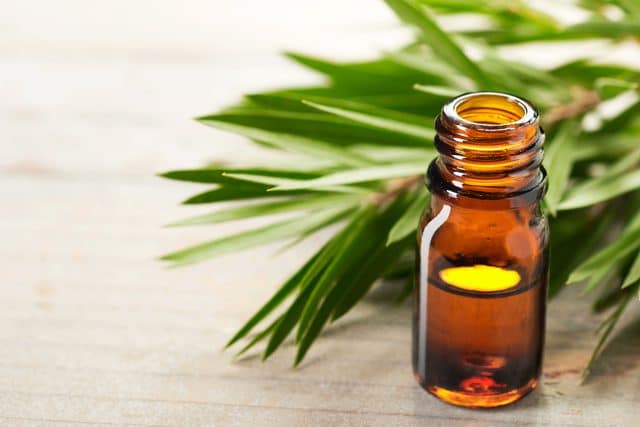
1. Tea Tree Oil
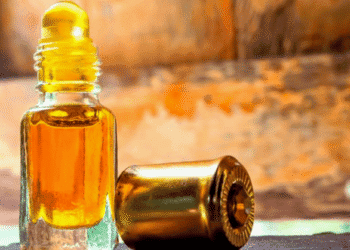
Tea tree oil is probably one of the best-known natural remedies for spots, and unlike many DIY acne hacks, there is at least some evidence supporting its use.
Tea tree oil has antimicrobial and anti-inflammatory properties. Mayo Clinic notes that gels containing around 5% tea tree oil may help heal acne, although they can work more slowly than conventional acne treatments.
How I Would Use It
I wouldn’t put neat essential oil directly onto my face.
A much safer option is to choose a commercially prepared acne gel or skin-care product containing tea tree oil at an appropriate concentration. This takes the guesswork out of diluting essential oils at home.
If I’m trying any new product, I like to test a small area first.
Pros
Plant-based option
May reduce inflammation
May help mild pimples
Widely available
Useful for people wanting an alternative to conventional acne ingredients
Cons
Can cause redness or dryness
May sting sensitive skin
Usually works slowly
Evidence isn’t as strong as it is for established acne medications
Essential oils can cause contact dermatitis in some people
Safety
Tea tree oil should not be swallowed.
It can also irritate sensitive skin, and Mayo Clinic notes that the itching, burning, redness and dryness it can cause may make it particularly unsuitable for people with rosacea.
I would stop using it if my skin became unusually itchy, swollen, painful or persistently red.
Best for: Occasional mild inflammatory pimples.
My rating: ★★★☆☆
2. Salicylic Acid
Salicylic acid may not sound like a traditional “home remedy,” but if we’re talking about something I can safely do at home to help heal acne, this is one of the options I would choose before experimenting with ingredients from my refrigerator.
Salicylic acid is particularly useful because it helps remove dead skin cells and unclog pores.
According to the AAD, it can be especially useful for treating clogged pores, whiteheads and pimples.
You’ll find it in cleansers, gels, creams, pads and spot treatments.
How to Use It
Follow the instructions on whichever product you buy.
If my skin is sensitive, I prefer introducing a new acne product gradually rather than immediately covering my face with several different active ingredients.
And more definitely isn’t better.
If salicylic acid is drying my skin out, I’d reduce how often I use it rather than scrubbing harder or adding another exfoliating product.
Pros
Unclogs pores
Particularly helpful for blackheads and whiteheads
Easy to find
Available without a prescription
Can help prevent future clogged pores
Cons
Can cause dryness
May sting irritated skin
Excessive use can cause peeling
Doesn’t necessarily deal with every type of acne
Safety
Avoid layering lots of strong exfoliating products when you’re first getting started.
For example, using salicylic acid alongside a harsh facial scrub, strong toner and multiple acids is much more likely to leave me with an irritated skin barrier than beautifully clear skin.
Best for: Blackheads, whiteheads and clogged pores.
My rating: ★★★★☆
3. Benzoyl Peroxide
For red, inflamed pimples, benzoyl peroxide is another at-home acne treatment with considerably more evidence behind it than most homemade spot remedies.
Benzoyl peroxide helps reduce acne-causing bacteria on the skin and is available in washes, creams and gels.
The AAD suggests that people treating mild acne at home can consider starting with 2.5% benzoyl peroxide, as stronger isn’t necessarily better and higher concentrations may be more irritating.
How to Use It
Start slowly and follow the manufacturer’s directions.
If my skin tends to react to everything, I would begin with a lower-strength product rather than immediately reaching for 10%.
It is also worth remembering that benzoyl peroxide can bleach towels, pillowcases and clothing.
Ask me how many facecloths have probably been ruined by acne treatments over the years!
Pros
Well-established acne treatment
Helps reduce acne-causing bacteria
Particularly useful for inflammatory pimples
Available without a prescription
Can be combined with other acne treatments
Cons
Can dry the skin
Can cause peeling or irritation
May produce a burning or stinging sensation
Can bleach fabric
What About the Benzene Concerns?
You may have seen reports concerning benzoyl peroxide products and benzene.
The AAD says current research has been reassuring overall and has not found an association between regular benzoyl peroxide use and increased cancer risk, although research is continuing. It recommends storing products according to their instructions, avoiding excessive heat and replacing benzoyl peroxide products periodically.
If you’re uncomfortable using benzoyl peroxide, salicylic acid, adapalene and azelaic acid are among the alternatives worth discussing with a dermatologist.
Best for: Mild-to-moderate red and inflamed pimples.
My rating: ★★★★★
4. Gentle Cleansing and Moisturizing
This sounds ridiculously simple, but one of the best things I’ve learned about acne-prone skin is that attacking it isn’t necessarily the answer.
When my skin breaks out, the temptation is to scrub, exfoliate and wash it constantly.
Unfortunately, irritation can make acne look considerably worse.
The AAD recommends gently washing acne-prone skin rather than scrubbing it, while Mayo Clinic advises washing with a mild cleanser and warm water.
My Simple Routine
I would keep things basic:
Morning
Gentle cleanser → lightweight non-comedogenic moisturizer → SPF 30+ sunscreen.
Evening
Gentle cleanser → chosen acne treatment → moisturizer.
That’s it.
I wouldn’t automatically add scrubs, brushes, masks, strong toners and three different acids.
Pros
Inexpensive
Suitable for almost everyone
Helps protect the skin barrier
Reduces unnecessary irritation
Easy to combine with acne treatments
Cons
Doesn’t produce dramatic overnight results
Cleansing alone won’t necessarily treat moderate or severe acne
You still need to choose suitable products
Safety
Look for moisturizers, makeup and sunscreens labelled non-comedogenic or “won’t clog pores.”
And don’t scrub acne.
The AAD specifically advises gentle skin care because repeatedly irritating acne-prone skin can contribute to further breakouts.
Best for: Everyone with acne-prone skin.
My rating: ★★★★★
5. Cold Compress for a Red, Angry Pimple
Sometimes I don’t need a treatment for my entire face. I just need that enormous red spot on my chin to calm down.
That’s where a cold compress can be useful.
Cold won’t cure the underlying cause of acne, but cooling an inflamed area may temporarily help reduce the sensation of swelling and discomfort.
How I Do It
Never put an ice cube straight onto your skin.
Instead:
Wrap ice or a cold pack in a clean, soft cloth.
Gently hold it against the affected area for a short period.
Remove it if the skin becomes painful, numb or uncomfortable.
Repeat later if necessary rather than continuously icing the skin.
Pros
Practically free
Quick
Can soothe a painful spot
Doesn’t involve harsh chemicals
Useful before applying makeup
Cons
Doesn’t unclog pores
Doesn’t prevent acne
Results are temporary
Won’t treat bacterial or hormonal causes of acne
Safety
Never leave ice directly against your skin for prolonged periods. Excessive cold can damage skin.
And however tempting it may be, don’t squeeze the pimple afterwards.
Popping and picking acne increases inflammation and can raise your risk of marks and scarring.
Best for: Temporarily calming a swollen or uncomfortable pimple.
My rating: ★★★☆☆
Home Remedies for Acne I Would Avoid
This section is just as important as the remedies I recommend.
There are countless acne “hacks” online that I wouldn’t put anywhere near my face.
Toothpaste
Using toothpaste as a spot treatment is one of those beauty tricks that refuses to disappear.
Dermatologists aren’t fans.
The AAD specifically advises against using toothpaste on acne and recommends using acne ingredients such as benzoyl peroxide, salicylic acid or adapalene instead.
Toothpaste was formulated for teeth — not facial skin.
Lemon Juice
The logic usually goes that lemon is acidic, therefore it must exfoliate and clear acne.
Unfortunately, fresh lemon juice isn’t a carefully formulated facial acid treatment.
It can sting and irritate the skin, and citrus on the skin can also cause problematic reactions with sunlight.
I’d save the lemon for my water.
Baking Soda
Baking soda is another ingredient that regularly appears in homemade acne scrubs.
I wouldn’t use it.
Our skin barrier relies on maintaining an appropriate environment, and repeatedly applying harsh alkaline ingredients can lead to dryness and irritation.
Undiluted Essential Oils
More isn’t better.
Even ingredients such as tea tree oil can irritate the skin when used incorrectly.
I’d choose a properly formulated skin-care product rather than experimenting with neat essential oils.
Aggressive Sugar or Salt Scrubs
Acne cannot be scrubbed away.
Physical scrubbing can damage already inflamed skin and leave a breakout looking redder and angrier.
When it comes to acne, gentle usually wins.
A Simple At-Home Acne Routine
If I suddenly started experiencing mild acne and wanted to keep my routine simple, this is roughly where I would begin.
Morning
1. Gentle cleanser
Wash without scrubbing.
2. Acne treatment if appropriate
Salicylic acid may be particularly useful if clogged pores and blackheads are my biggest problem.
3. Non-comedogenic moisturizer
Yes, oily and acne-prone skin can still need moisturizer.
4. Broad-spectrum SPF 30+ sunscreen
This is particularly important when using acne treatments that can make skin more sensitive or when I’m trying to prevent post-acne marks from becoming more noticeable.
Evening
1. Remove makeup
Don’t sleep in foundation or concealer.
2. Cleanse gently
No aggressive brushes required.
3. Apply my chosen acne treatment
I would choose one main treatment initially rather than introducing five products simultaneously.
4. Moisturize
Keeping the skin barrier comfortable can make it much easier to stick with an acne treatment.
How Long Do Home Acne Heal Treatments Take to Work?
This is where patience matters.
A spot may look slightly calmer within a few days, but treating acne properly isn’t usually an overnight process.
Mayo Clinic notes that nonprescription topical acne treatments may take around two to three months of consistent use before noticeable results develop.
That’s why I wouldn’t abandon a product after three days simply because I woke up with another pimple.
At the same time, there’s a difference between waiting for results and tolerating an obvious reaction.
If a product causes severe burning, swelling, blistering or another significant reaction, stop using it and seek medical advice.
Pros and Cons of Trying to Heal Acne at Home
Pros
Affordable: Many effective options are available without a prescription.
Convenient: Mild acne can often be managed as part of your normal skin-care routine.
Plenty of choices: Ingredients such as benzoyl peroxide and salicylic acid are widely available.
Can work well for mild acne: The AAD says many adults with mild acne can treat it effectively using nonprescription acne products.
Cons
Trial and error: What works beautifully for one person’s skin can irritate someone else’s.
Slow results: Proper acne treatment takes patience.
Easy to overdo it: Combining too many products can leave skin dry, flaky and inflamed.
Not enough for severe acne: Cysts, nodules and acne that causes scarring usually need professional treatment.
DIY remedies aren’t necessarily safe: Social media trends can spread far more quickly than reliable dermatological advice.
When Should I See a Dermatologist?
There comes a point when home remedies simply aren’t enough.
I would speak to a doctor or dermatologist if I had:
Deep, painful lumps under the skin
Cystic acne
Frequent severe breakouts
Acne that was leaving scars
Significant dark marks after spots heal
Acne that suddenly became severe
Acne that wasn’t improving despite consistent treatment
Skin reactions to over-the-counter acne products
Mayo Clinic advises seeking medical treatment when self-care doesn’t clear acne, particularly when acne is persistent or severe.
The AAD similarly points out that large, painful pimples deep beneath the skin and acne that causes scarring are unlikely to be adequately treated with products bought in a store.
Final Thoughts
When I’m dealing with acne, my instinct may be to throw everything at it and hope one of the treatments works by morning.
In reality, my skin is generally much happier when I take the opposite approach.
Keep things gentle. Choose one or two treatments with evidence behind them. Moisturize. Wear sunscreen. And give the treatment time to work.
Of the five remedies I’ve covered, salicylic acid and benzoyl peroxide have stronger evidence behind them as actual acne treatments, while tea tree oil may be useful for some people looking for a more natural alternative.
Gentle cleansing and moisturizing provide the foundation for any good acne routine, and a cold compress is a handy option when I simply want to calm an angry-looking spot.
Most importantly, I wouldn’t assume that something belongs on my face just because I can find it in my kitchen.
Sometimes the best home remedy for acne isn’t the most unusual one — it’s simply a gentle, consistent routine using ingredients that have actually been shown to work.
This article is for general informational purposes and isn’t a substitute for individual medical advice. If acne is severe, painful, persistent or causing scars, speak with a healthcare professional or dermatologist.
Resources
American Academy of Dermatology (AAD) – Adult Acne Treatment Dermatologists Recommend
Covers at-home acne treatment, benzoyl peroxide, salicylic acid, azelaic acid, and why remedies such as toothpaste should be avoided.
https://www.aad.org/public/diseases/acne/diy/adult-acne-treatment
American Academy of Dermatology – Acne: Diagnosis and Treatment
A useful medical reference covering benzoyl peroxide, salicylic acid, topical treatments, sunscreen and professional acne treatment.
https://www.aad.org/public/diseases/acne/derm-treat/treat
American Academy of Dermatology – How to Treat Acne
Includes dermatologist-recommended home skin-care advice such as gentle cleansing, avoiding irritation and using appropriate acne treatments consistently.
https://www.aad.org/news/how-to-treat-acne